
By Ehtijad Ali
Updated: October 2026
Reading time: about 8 minutes
Have you received a letter saying your personal information was exposed in a data breach? You may be wondering what it means, whether your money is safe, or if someone can steal your identity.
First, do not panic. A data breach notice does not always mean someone has used your information. But it is important to understand the letter and take the right steps.
This guide explains what to do after receiving a data breach notification letter. You will learn how to check if the letter is real, understand what information was exposed, and decide whether free credit monitoring is worth using.
What should you do after a data breach letter?
1. How to tell if a data breach letter is real
Scammers sometimes send fake data breach letters to steal passwords, money, or personal details. A real-looking letter is not proof that it is genuine.
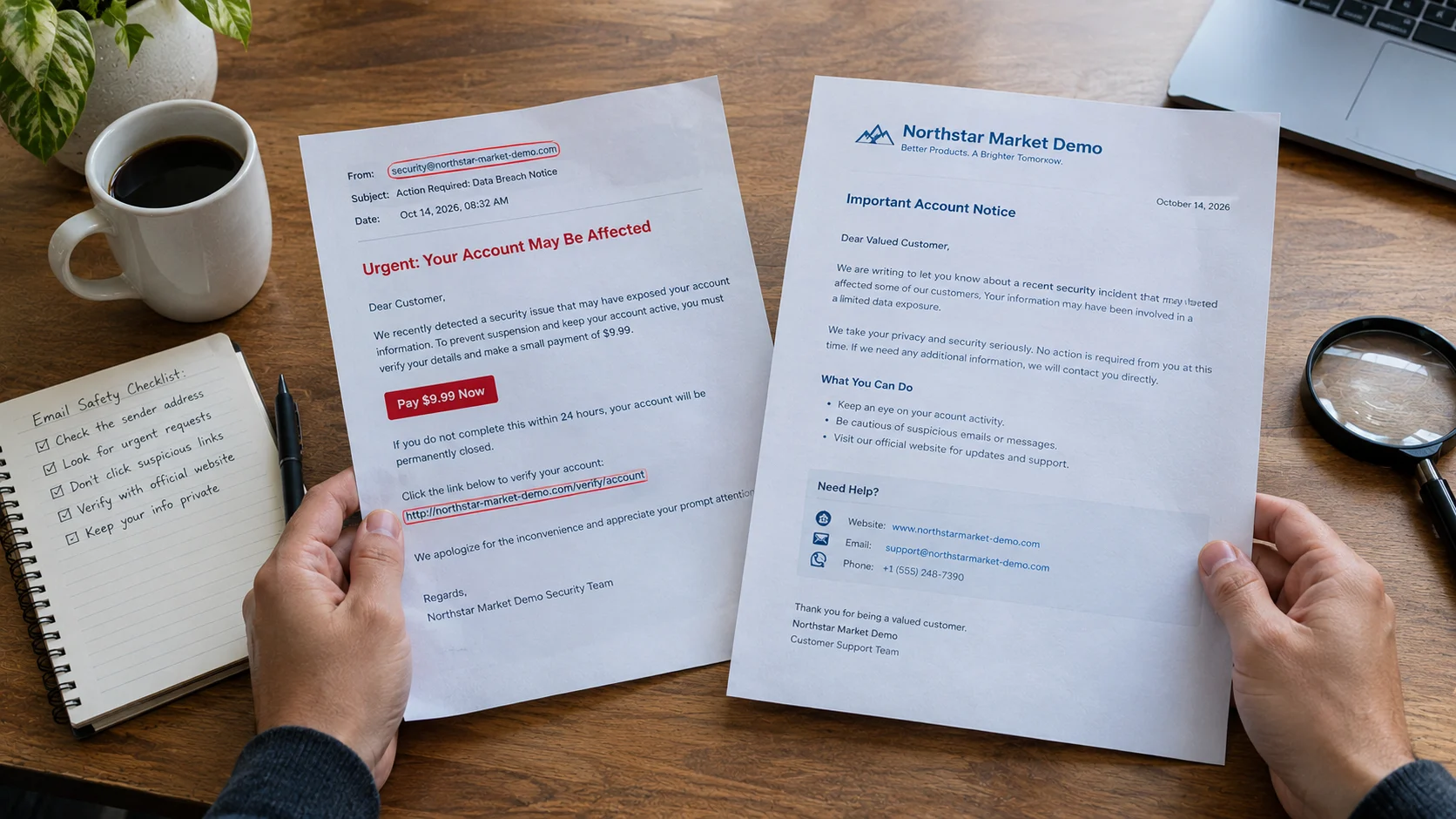
Before you follow its instructions, check these things:
- Check the company name. Did you shop there, open an account, work there, or use its services?
- Check the date. Look for when the breach happened and when the company sent the notice.
- Find the official website. Type its known web address into your browser instead of clicking a link in the letter.
- Contact the company safely. Use contact details from its official website, app, or an old bill you trust.
- Watch for pressure. Threats, urgent payment requests, strange attachments, and requests for your password are warning signs.
A real company may ask you to take action, but you should not need to send your password or pay a surprise fee to prove who you are. If you are unsure, contact the company using a trusted contact method.
You can also check the website of the relevant state attorney general in the United States. Some states publish data breach notices or provide ways to search for reported breaches. For example, see the California Attorney General’s data breach list. Not every notice will appear in a public list.
2. How to read a data breach notification letter
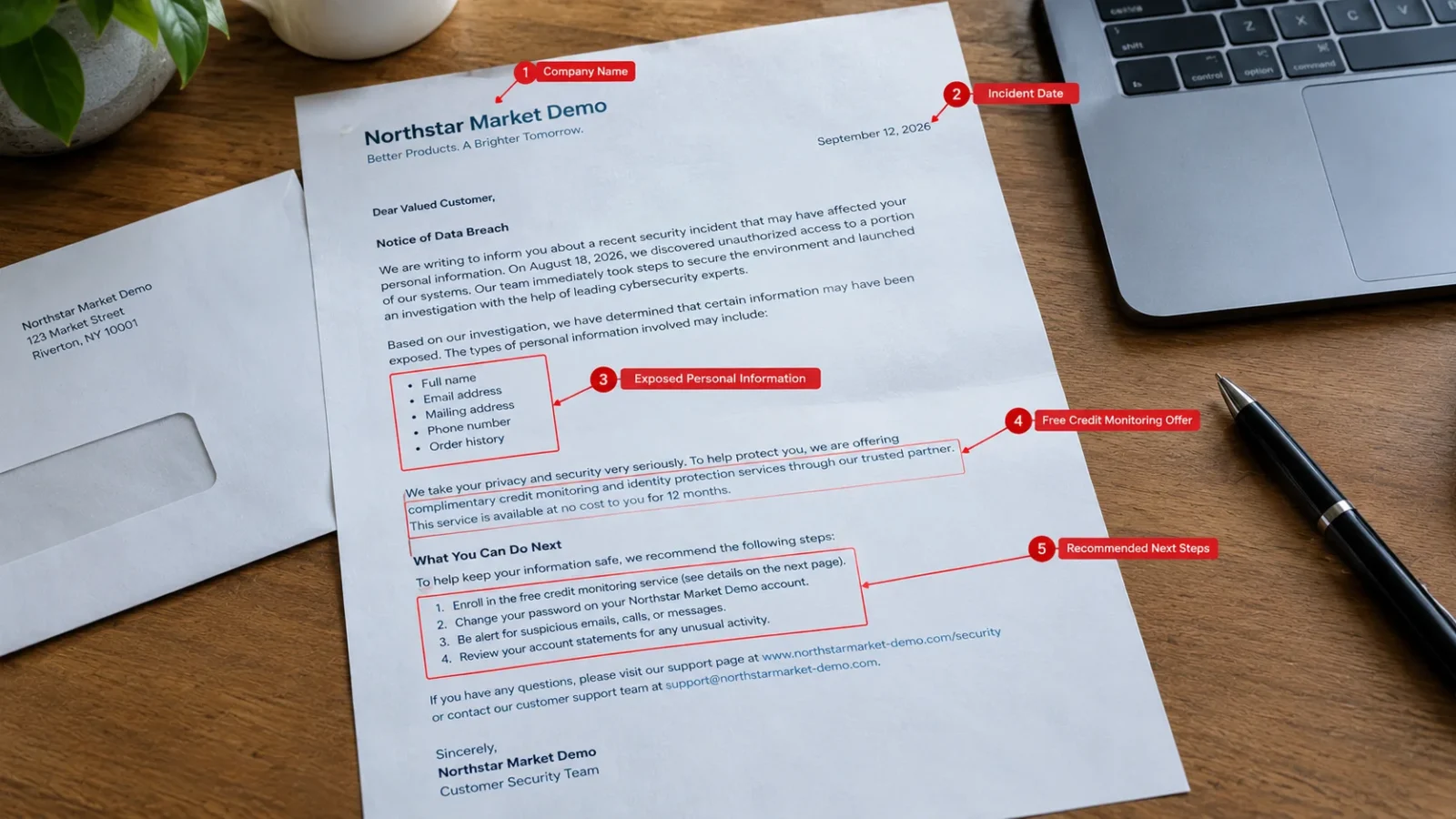
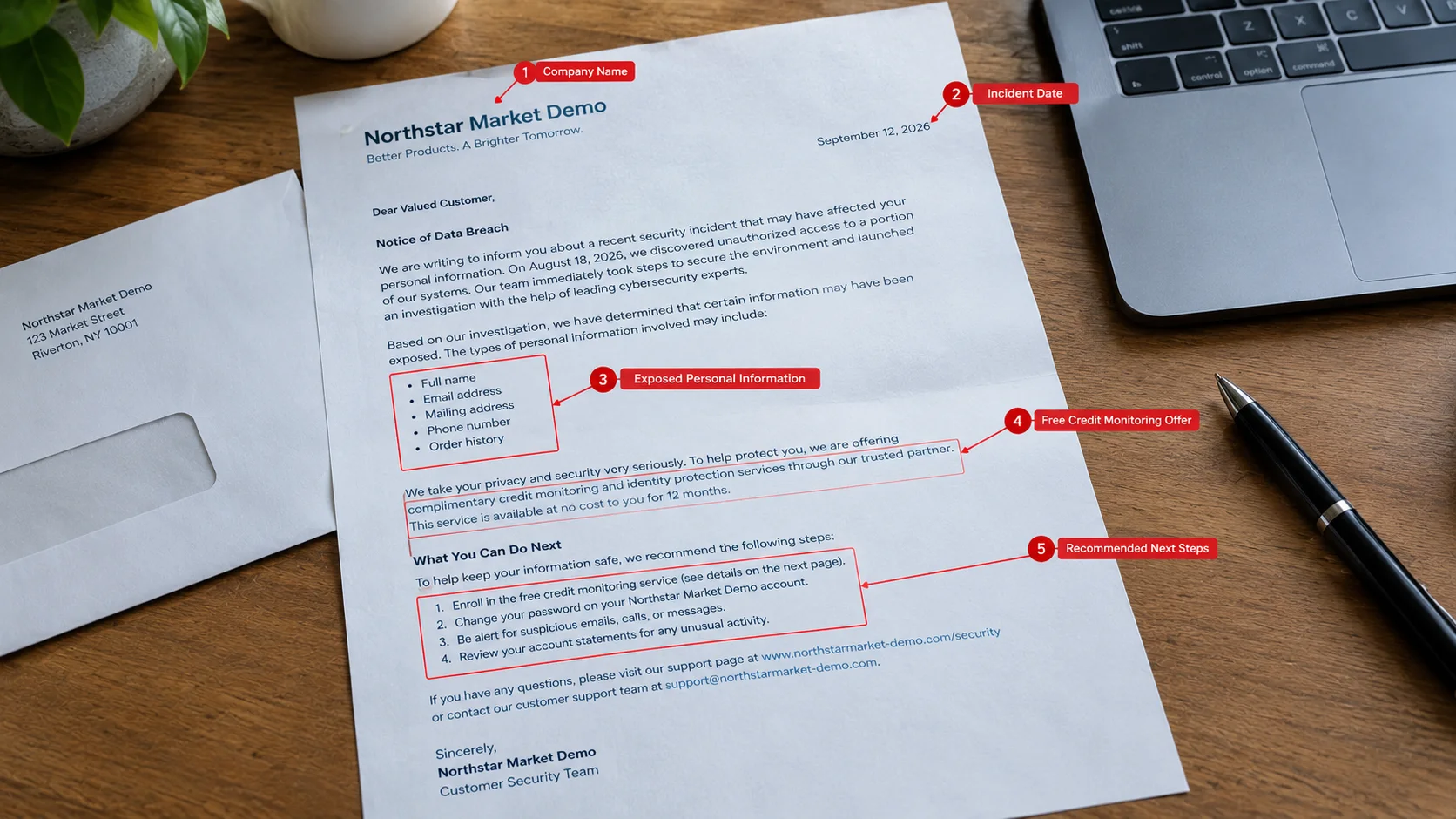
A data breach notice often has several parts. Here is what each part means, using a made-up company called Northstar Market Demo as an example.
Part 1: What happened?
This section explains how the company found the problem. Someone may have broken into its computer system, or private files may have been seen by the wrong person.
Look for the date of the incident and when the company discovered it. These dates may be different. The letter may also say that the company is still investigating.
Part 2: What information was exposed?
This is one of the most important parts of the letter. It tells you which details may have been seen, copied, or stolen.
Read this section carefully. The risk depends on what information was involved, not just the number of people affected.
Part 3: What is the company doing?
The company may explain that it has fixed a security problem, reset passwords, contacted the police, or hired experts to investigate.
These actions are helpful, but they do not mean you should ignore the notice. Follow any sensible steps that apply to your information.
Part 4: What should you do?
The letter may tell you to change a password, check your bank statements, watch for fake messages, or contact a credit reporting company.
Follow the advice that matches the information exposed. If the letter does not explain what to do, contact the company and ask for clear steps.
Part 5: Is free protection offered?
Some companies offer free credit monitoring or identity theft help after a breach. The letter should explain what is included, how long it lasts, and how to sign up.
Check the offer through the company’s official website before sharing more personal details.
3. Which exposed information is most important?
Not all stolen information creates the same risk. Use this simple guide to decide what to protect first. To understand why some details matter more, read what hackers do with stolen data.
Email address or phone number
You may receive more spam, fake delivery messages, or calls from scammers. Be careful with unexpected links and requests for personal details. You can also learn how to check if your email was in a data breach.
Password or login details
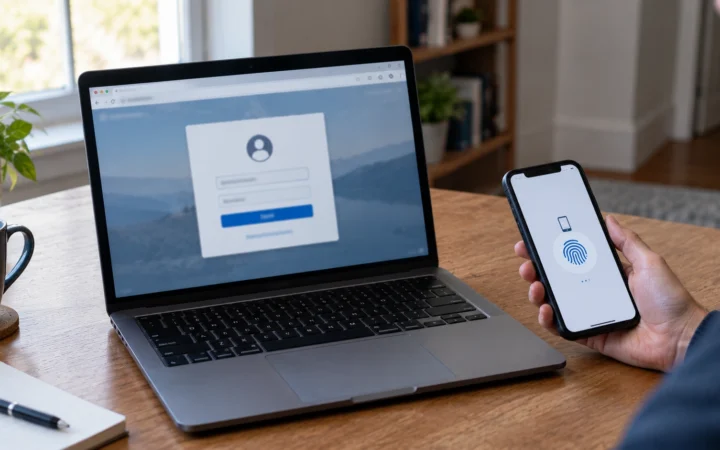
Change the affected password as soon as possible. If you used it on other websites, change it there too. Give each account its own password and turn on two-step login when available.
Bank or card details
Check your recent transactions. If you see a payment you did not make, contact your bank using its official app or phone number. Ask whether your card needs to be blocked or replaced.
Government ID or Social Security number
This information can be used in attempts to pretend to be you or open accounts in your name. Follow the advice from the letter, check your credit reports where available, and consider a fraud alert or credit freeze if you live in the United States.
If your passport, driving licence, or another identity document was exposed, contact the office that issued it to ask whether you need a replacement or other protection.
4. Should you accept free credit monitoring?
Free credit monitoring can be useful after a data breach, especially when your Social Security number or other details used for credit checks were exposed.
It may alert you to certain changes in your credit file, such as a new account. However, it may not stop fraud, find every type of identity theft, or protect your bank account from every risk.
Before signing up, check these three things:
- Cost: Is the service free for the full period, or does it become paid later?
- Coverage: Does it monitor your credit, help with identity theft, or offer other services?
- Deadline: Is there a date by which you must sign up?
If the offer is genuine and covers a real risk, accepting it may be a sensible choice. Keep in mind that monitoring is not the same as preventing identity theft.
The US Federal Trade Commission explains what to do after a breach in its official data breach guidance.
5. Your action plan after receiving a data breach notice
Do these steps in order. Start with any danger that could let someone access your money or accounts right now.
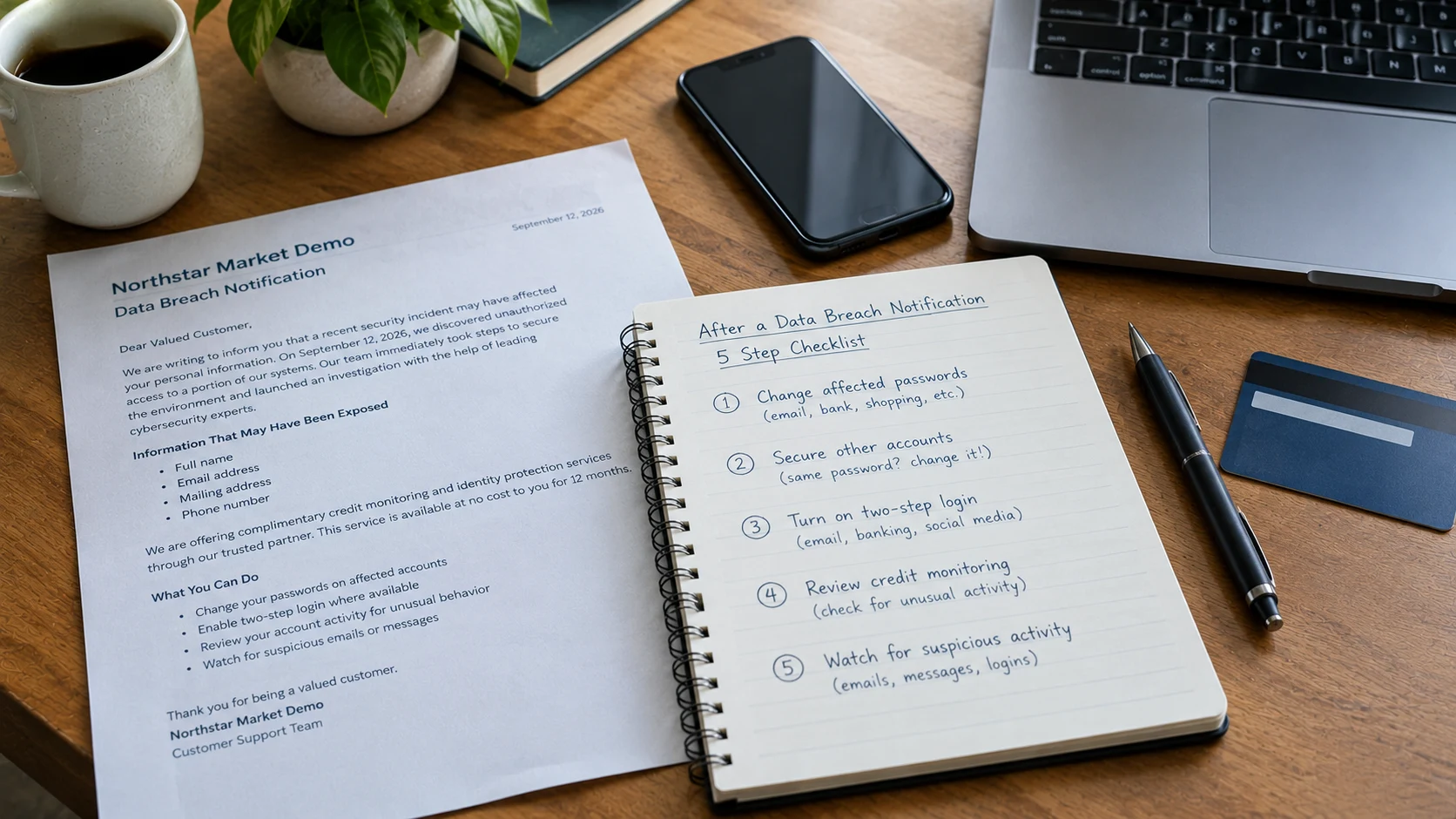
Step 1: Protect your money and accounts
If your bank or card details may be exposed, check transactions and contact your bank about suspicious activity. If your login details were exposed, change the affected password and any reused passwords. Secure your email account first if it could be at risk.
Step 2: Check for identity theft
Look for unfamiliar accounts, bills, payments, or credit checks. If you are in the United States, visit IdentityTheft.gov for free guidance if you think someone has used your identity.
Step 3: Use available protection
Consider the free monitoring offer if it fits your needs. If your Social Security number was exposed, you can also learn about credit freezes and fraud alerts from the FTC’s identity theft guide.
Step 4: Keep the letter
Save the notice, the date you received it, and any reference number. Keep notes about the company contacts you speak with. Do not post the letter online if it contains your personal information.
Step 5: Watch for follow-up scams
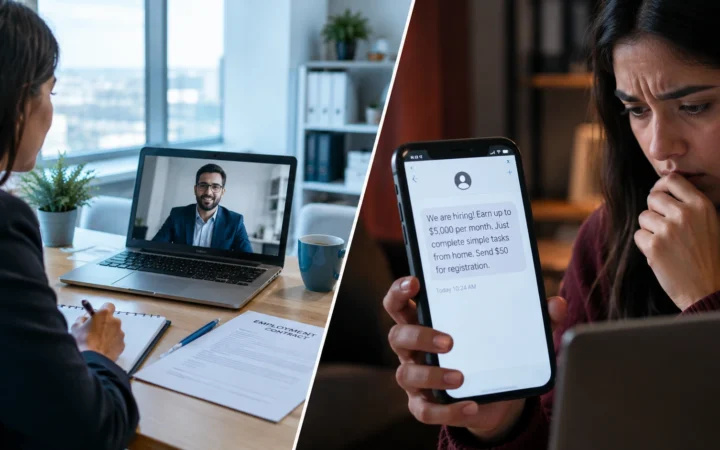
Scammers may use a real breach as a reason to contact you. Be careful with calls, texts, and emails that ask you to pay a fee, share a password, or give a login code. Contact the company through a trusted channel if you are unsure.
6. What if the company does not answer your questions?
Ask the company to explain what happened, which information was affected, and what steps it recommends. Keep a copy of your message and any reply.
If you are in the UK, the Information Commissioner’s Office (ICO) explains what people can do after a personal data breach.
In the United States, you can look for guidance from your state attorney general or the relevant consumer protection office. In other countries, contact your local data protection authority. The right place to report a concern depends on where you live and what happened.
Questions people ask
Does a data breach letter mean my identity was stolen?
No. It means some of your information may have been exposed. It does not prove that someone has used it. Read the notice and take steps based on the type of information involved.
Should I click the link in a data breach letter?
Not until you have checked that the letter is genuine. Visit the company’s official website yourself or contact it through a trusted phone number. Never share your password or login code through an unexpected link.
Is free credit monitoring enough after a data breach?
No. It may help you spot certain changes, but it does not prevent every type of fraud. You should still secure your accounts and check for suspicious activity.
What if the letter says my password was exposed?
Change it right away on the affected website. Change it anywhere else you reused it, too. Use a different password for every account and turn on two-step login.
Should I freeze my credit after getting a data breach notification letter?
If your Social Security number, bank details, or ID number was exposed, a credit freeze can be a strong step. It stops most lenders from looking at your credit report, so a criminal has a much harder time opening a new account in your name. In the US, freezing and unfreezing your credit is free. The FTC’s guide to credit freezes and fraud alerts explains how it works in simple steps.
How long should I keep watching my accounts?
Keep checking for a long time, not just for a few days. Stolen information can be sold, shared, or used much later. A good habit is to look at your bank statements every month and check your credit reports a few times a year. If something looks wrong, act quickly. Contact your bank or the company using its official website or phone number, not a link sent to you in a message.
Can I ask the company what data it holds about me?
In many places, yes. In the UK and EU, you can make a request to see the personal information a company keeps about you. Ask in writing and keep a copy of your message. This can help you understand exactly what was exposed.
Helpful links
Use these trusted resources to learn more about data breaches and protecting your information. You can also explore our dark web glossary for simple explanations of online safety terms.
- IdentityTheft.gov: What to do after a data breach
- FTC: What to know about identity theft
- ICO: Steps after a personal data breach
- California Attorney General: Data breach list
- DeepHiDX: How to check if your email was in a data breach
- DeepHiDX: What is credential stuffing?
The short version
If you receive a data breach notification letter, do not panic, but do not ignore it. Check that it is genuine, find out which information was exposed, and protect the accounts or documents at risk.
Use free credit monitoring when it fits your needs, watch for strange activity, and save the notice for your records. A few careful steps today can help protect you from bigger problems later.

Comments