

By Ehtijad Ali
Updated: October 2026
Reading time: about 10 minutes
What is on the dark web? Many people picture a scary secret world full of criminals. The real answer is more mixed and much less dramatic. In 2026, what is on the dark web includes news websites, safe tip lines for reporters, privacy tools, chat forums, old broken websites, scams, stolen data for sale, and illegal shops.
This guide explains each part in simple words. You will learn what is good, what is harmful, and what is just a myth. You will also learn why nobody can say exactly how big the dark web is.
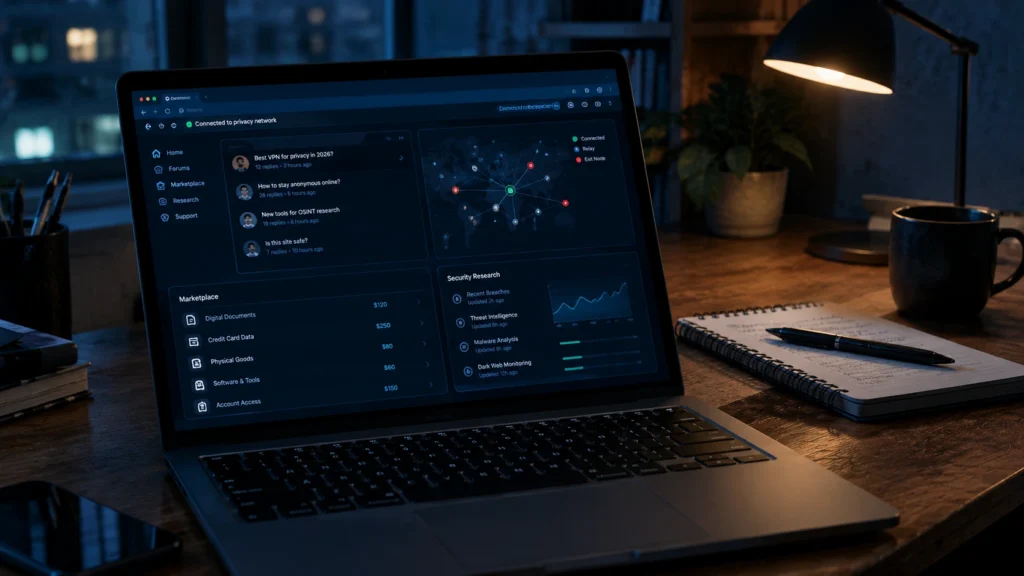
Quick answer: The dark web is a small part of the internet that you can only reach with special software, such as the Tor Browser. Here are 7 things you will really find there:
- Privacy tools and private chat services
- News websites and safe tip lines for reporters
- Forums and online communities
- Scams and fake shops
- Stolen passwords and personal data for sale
- Illegal markets that often get shut down
- Lots of old websites that no longer work
This article is for learning only. It does not explain how to find illegal markets or buy anything. You do not need to visit the dark web to stay safe online.
Table of Contents
What is the dark web, in simple words?
Think of the internet like a big city. The part you use every day, with Google, YouTube, and news sites, is like the main streets. Anyone can walk there. The deep web is like the locked rooms inside buildings, such as your email inbox or your bank account. Those rooms are private, but they are not secret or bad. Our guide on the deep web vs dark web explains this difference in more detail.
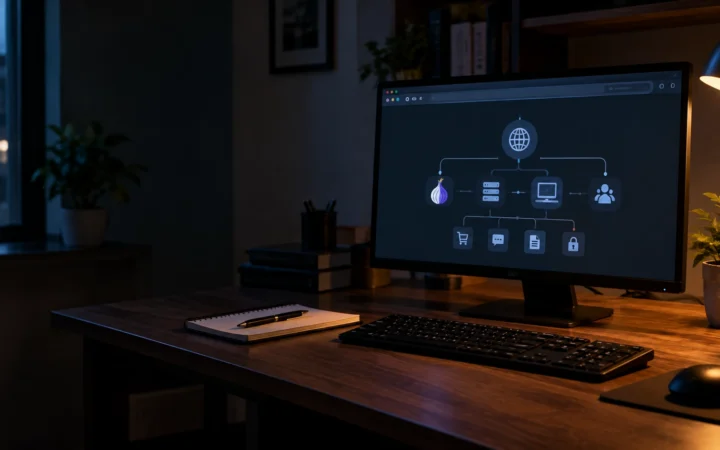
The dark web is a tiny part of the deep web. Its websites use special addresses that end in “.onion”. You cannot open them in a normal browser. You need a tool like the Tor Browser, which sends your connection through several computers around the world to hide where you are. If you are curious why these addresses look so strange, read how onion addresses work.
These hidden websites are called onion services. The name comes from the layers of protection, like the layers of an onion. The Tor Project gives a short, official explanation of what a .onion address is.
In most countries, simply using Tor is legal. What you do with it is what matters. You can learn more in our guide: Is Tor illegal?
What is on the dark web? The main types of websites
Dark web websites are not all the same. The table below shows the main kinds. It is a simple guide, not a ranking of which kind is most common.
| Type | Examples | What to know |
|---|---|---|
| Privacy and chat | Private messaging, safe file sharing | Helps people who need to protect their privacy |
| News and tip lines | Copies of news sites, tools to send secret tips to reporters | Helps people read news and report wrongdoing more safely |
| Communities | Forums and discussion boards | Some are harmless, and some talk about crime |
| Stolen data | Leaked passwords and personal details | Often old, fake, or resold many times |
| Illegal markets | Shops selling banned goods | Often shut down by police or closed by scammers |
| Scams and dead sites | Fake shops, copycat pages, broken links | A hidden address does not mean a site is real or safe |
No one has a trustworthy percentage for each type. The numbers change depending on who counted, when they counted, and what they counted.
The good side of the dark web
Many people are surprised to learn that not everything on the dark web is criminal. The Tor Project, the group that makes the Tor Browser, lists many lawful uses. These uses matter most for people who live with censorship or who could get in trouble for speaking up.
1. News websites people can reach safely
Some big news groups offer a copy of their website as an onion service. This helps readers in countries where the normal website is blocked. Still, readers should check that the address really belongs to that news group, because fake copies exist.
2. Safe tip lines for reporters
Tools like SecureDrop let people send documents to reporters more privately. For example, a worker who sees something wrong at their company can share proof without giving away their name right away.

But these tools are not magic. A careless mistake, like leaving your name inside a file, can still show who you are. Safe tools lower the risk. They do not remove it.
3. Privacy tools and file sharing
Onion services can also be used for private chats and sharing files. A free tool called OnionShare lets people share files directly, without uploading them to a company’s server.
Like a car or a kitchen knife, these tools can be used for good or bad. The tool does not decide. The person using it does.
The criminal side: what is really there?
Crime on the dark web is real, and we should not pretend it is not. Europol, the police agency of the European Union, wrote a 2025 report called Steal, Deal and Repeat. It explains how criminals steal, trade, and misuse people’s data. The report covers much more than just dark web websites.
1. Stolen passwords and personal information
Criminals sell or share stolen login details, names, addresses, and data taken from companies. Buyers may use them to break into accounts, send fake messages, or pretend to be someone else. Our guide on what hackers do with stolen data shows how this happens step by step.
But many listings are not what they claim. Some sellers lie about what they have. Others sell the same old data again and again. An ad for stolen data shows that someone wants to sell it. It does not prove the data is real or new.
2. Hacking and scam services
Some sellers offer help with scams, fake messages, or breaking into accounts. This does not only happen on the dark web. Criminals also use normal websites, chat apps, and private groups.
For example, a password might be stolen through a fake email on the normal internet and then sold somewhere else. That is why calling every online crime a “dark web crime” can be misleading. It helps to learn how to tell if a message is a scam, because that is where many attacks start.
3. Illegal markets and fake shops
Some hidden websites have worked as markets for drugs, stolen goods, and hacking tools. Many of them do not last long. Police shut them down, or the owners run away with everyone’s money. This is called an “exit scam.” The story of Silk Road is a famous example, and you can read how police catch dark web criminals.
People who try to buy there can be cheated, robbed, or caught. There is no customer service and no refund. This article does not explain how to find these markets, and we do not recommend looking.
What researchers can see in 2026
How do experts study what is on the dark web? One helpful place is Tor Metrics, the Tor Project’s public statistics website. It shares estimates about the Tor network, such as how many onion addresses are seen over time.

These numbers are estimates. Tor Metrics explains that its count of unique version 3 onion addresses is worked out from reports sent by some of the computers that help run the network. It is not a live list of every website.
University researchers face the same problem. A 2023 study, On the gathering of Tor onion addresses, compared different ways of collecting onion addresses and found that each way misses some. Another study, Onion under Microscope, looked at how onion websites link to each other. It showed that the dark web is hard to map because there are only a few ways in.
So what can we say for sure? Researchers can study samples, find patterns, and notice changes. They cannot make a perfect list of every hidden website.
What does a dark web number actually count?
When you see a big number about the dark web, ask what was counted:
- Addresses: how many onion addresses a system noticed. One owner can have many.
- Websites: services that were working at the moment someone checked.
- Pages: single pages inside websites. There are many more pages than websites.
- Traffic: how much data moves through the network. It does not show what people are doing.
- Crime ads: listings found by investigators. Some are fake or repeated.
These numbers measure different things. You cannot add them together to get one true size of the dark web, and you cannot use them to say exactly how much of it is criminal.
Why the dark web is smaller and more boring than people think
Online videos often show the dark web as a huge secret city full of shocking secrets. Real research is much less exciting. Many onion services are ordinary websites with a different way in. Others are empty, broken, or copies of each other.
- There is no full directory. No public list reliably shows every onion website.
- Websites disappear. Sites move, close, or stop working, so a list from a few months ago may already be out of date.
- Some sites are easier to find. Researchers see popular sites more often and may miss well-hidden ones.
Even Europol says that a lot of criminal activity happens in closed chat groups that are hard to see. Skilled investigators do not see everything either.
This does not mean the dark web is harmless. It means we should not believe every scary story without proof.
4 dark web myths that are not true
Myth 1: The dark web is a giant, fully mapped secret internet
Truth: Onion services are real but hard to measure. Researchers only see parts of them. Any claim about the exact size should say what was counted and when.
Myth 2: Everything on the dark web is illegal
Truth: News access, safe tip lines, privacy tools, and file sharing also use onion services. Illegal content exists, but the technology has good uses too.
Myth 3: Tor makes you 100% invisible
Truth: Tor improves privacy, but it cannot protect you from every risk. Unsafe downloads, sharing personal details, or an infected device can still expose you. VPNs have limits too, as our Tor vs VPN guide explains.
Myth 4: Every scary dark web story is true
Truth: A screenshot, an anonymous post, or an online ad is not proof. Big claims need trusted reporting and a clear explanation of how they were checked.
How to stay safe without visiting the dark web
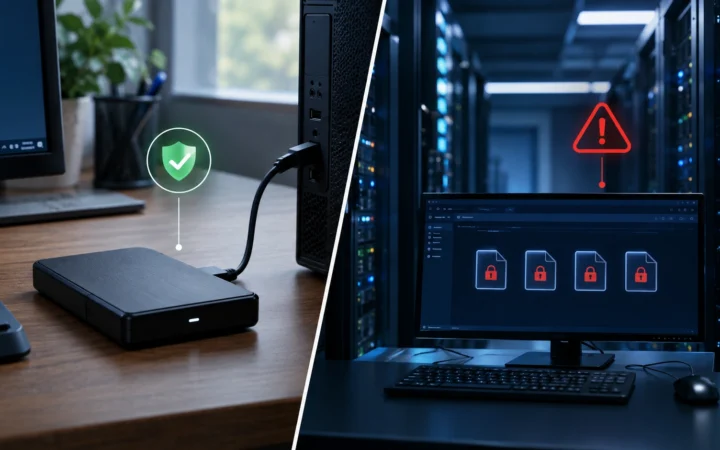
Most people never need to visit the dark web to protect themselves. The biggest dangers, like scam messages, stolen passwords, and data breaches, happen on the normal internet too. Here are simple steps that help:
- Use a different password for every account. A password manager can remember them for you.
- Turn on two-step login for your email, bank, and social media.
- Do not open strange attachments or downloads, even if a message sounds urgent.
- Keep your phone, computer, and browser updated.
- If a company says your data was leaked, change that password right away, and change it anywhere else you used it.
Want to know if your data has already leaked? Read our simple guide on how to check if your email was in a data breach. To learn what websites can see about you every day, read what information your browser shares. For a quick checklist, see the 5 most important privacy settings to change today.
The U.S. Cybersecurity and Infrastructure Security Agency also offers free, easy tips on its Secure Our World page. If someone has used your identity, IdentityTheft.gov from the FTC can help you make a recovery plan.
Frequently asked questions
What is on the dark web in 2026?
The dark web has a mix of privacy tools, news websites, tip lines for reporters, forums, old broken sites, scams, stolen data, and illegal markets. The mix changes all the time, and no one has a reliable percentage for each type.
Is everything on the dark web illegal?
No. Privacy tools, news access, reporting tools, and safe file sharing are all lawful uses. Some services support crime, so whether something is legal depends on what is being done and on the laws where you live.
Is it illegal to visit the dark web?
In most countries, using the Tor Browser is legal. Buying illegal goods, using stolen data, or joining crimes is still illegal. Laws are different in each country, so check your local rules.
Can anyone count every dark web website?
No. Researchers use estimates, web crawlers, and collected lists. Each method misses some sites, and counting addresses is not the same as counting people, pages, or criminal markets.
What is an onion service?
An onion service is a website or service that you can reach through the Tor network. It usually has a long address ending in .onion. It helps hide where the service is located and gives its users more privacy.
Does the dark web make you anonymous?
Not completely. Tor gives privacy protection, but mistakes like sharing personal details, opening unsafe files, or using an infected device can still reveal who you are.
Sources and helpful resources
These trusted sources were used to write this guide:
- Tor Metrics – official statistics about the Tor network.
- Tor Project: What is a .onion address? – a simple official explanation.
- Europol IOCTA 2025 – how criminals trade and misuse stolen data.
- On the gathering of Tor onion addresses – a study on how onion addresses are collected.
- Onion under Microscope – research on how the Tor web is connected.
- SecureDrop documentation – how news groups receive secret tips.
Related guides on DeepHiDX
Keep learning with these easy guides:
- Dark Web Glossary – simple meanings of words like onion service, darknet market, and Tor.
- Dark Web Timeline – the history of hidden websites and privacy networks.
- Deep Web vs Dark Web – 7 simple differences.
- Check If Your Email Was in a Data Breach – easy steps to protect your accounts.
- What Information Does My Browser Share? – everyday online privacy explained.
- Sources and Research – how we check facts and choose sources.
The bottom line
So, what is on the dark web? A mix of helpful privacy tools, news sites and tip lines, communities, broken old websites, scams, and real crime. Research shows that both good and harmful services exist, but nobody has a complete list of everything there.
The smartest view sits in the middle. The dark web is not only a criminal underworld, and it is not totally safe either. When you hear a shocking dark web story, ask three questions: who counted this, how did they count it, and when?
Most importantly, you can protect yourself without ever going there. Strong passwords, two-step login, and careful clicking keep you safer on every part of the internet.


Comments