


By Ehtijad Ali
Updated: October 2026
Reading time: about 12 minutes

Is Tor illegal? The short answer is: it depends on the country.
Tor is a privacy tool. It can hide your IP address and make it harder for websites and network providers to see where your internet connection comes from. People use it for privacy, research, journalism, and to reach information that may be blocked in their country.
But Tor laws are not the same everywhere. Some countries block or restrict access to Tor. In other places, using Tor is generally allowed. Also, using Tor does not make an illegal activity legal.
This guide explains is Tor illegal, where Tor may be blocked or restricted, why the answer changes by country, and what you should know before using it.
Important: This article is general information, not legal advice. If you are worried about the law in your country, check current local rules or speak with a qualified lawyer. You can also read our Disclaimer.
What is in this guide?
Is Tor illegal? The short answer
Tor is not illegal everywhere. Whether you can legally use Tor depends on the laws and rules where you live.
This is important because there are two different questions:
- Is Tor legal to use?
- Is Tor blocked or restricted by the government or internet providers?
These are not the same thing. A country can block access to Tor without having a simple law that says every use of Tor is a crime.
The Tor Project has also pointed out that the legal answer can be unclear from one country to another. Its legal information says that different facts and different legal systems can lead to different answers.
So if you search for “is Tor illegal”, be careful with websites that give one answer for the whole world.
What is Tor?
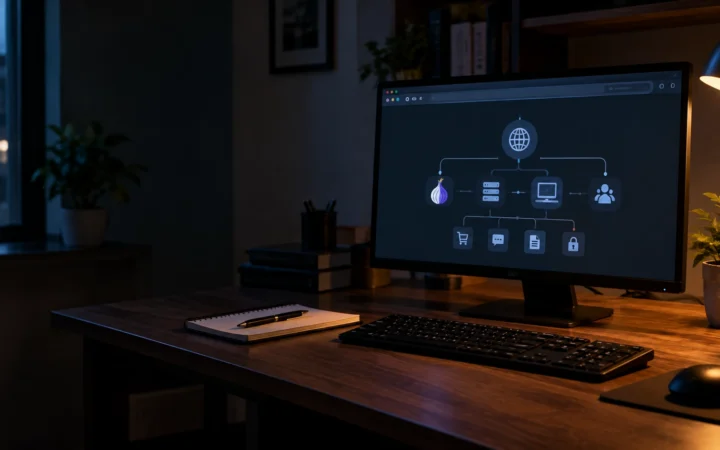
Tor is a network that helps people use the internet with more privacy. The name comes from The Onion Router.
When you use Tor, your connection passes through several Tor relays. This makes it harder for a website to connect your activity directly to your real IP address.

The Tor Project develops Tor software and provides information about how the network works.
Tor can be useful for people who want more privacy online. It can also help people reach information when normal internet access is censored.
For a simple explanation of terms such as Tor, Tor Browser, bridges, and pluggable transports, see our dark web glossary.
Legal does not mean unblocked
This is one of the most important parts of the answer.

A person may live in a place where using Tor is not clearly illegal, but their internet provider may still block Tor connections.
For example, OONI collects network measurements around the world and tests whether Tor and other services can be reached. Its data shows that internet blocking can change between countries, networks, and even internet providers.
Russia is one example. OONI reported that several Russian internet providers began blocking access to the Tor network in December 2021. The blocking was not the same on every network.
So “Tor is blocked” and “Tor is illegal” should not be treated as the same statement.
Countries where Tor is blocked or restricted
There is no simple worldwide list that can safely tell you “Tor is illegal in these countries.” Laws and internet rules can change, and a technical block does not always mean that using Tor itself is a crime.
However, Tor access has been restricted or blocked in some countries. The Tor Project currently provides country-specific information for places where direct access to the Tor network is censored, including China, Russia, Turkmenistan, and Belarus.
OONI also provides public measurements that can help researchers see where Tor access is being blocked or interfered with. Its Explorer contains millions of measurements from countries and networks around the world.
China
China has strong internet censorship, and direct access to Tor can be blocked. The Tor Project lists China as a censored region and provides information about connecting to Tor when direct access is restricted.
Russia
OONI documented Tor blocking by some Russian internet providers starting in December 2021. The report found that the block was not the same across every network.
Turkmenistan
The Tor Project says direct access to the Tor network is heavily restricted in Turkmenistan. This is an example of why users should check current country information instead of relying on an old “Tor is legal” list.
Other countries
Internet restrictions can change quickly. Some countries block Tor directly. Others may block the Tor Project website, some Tor relays, or other ways of reaching the network.
For current measurements, the best place to check is OONI Explorer. It lets you search for censorship measurements by country and network.
Is Tor illegal? A quick table by country
Here is a simple summary. It shows whether Tor is often blocked, which is not always the same as being illegal.
| Country | Is Tor blocked? | What to know |
|---|---|---|
| United States | Usually not | Many people use Tor for privacy. Breaking other laws is still illegal. |
| United Kingdom and Germany | Usually not | Tor is commonly used for privacy and research. |
| China | Often blocked | Direct access to Tor is heavily censored. |
| Russia | Blocked on many networks | Some internet providers began blocking Tor in December 2021. |
| Belarus | Often blocked | The Tor Project lists it as a censored region. |
| Turkmenistan | Heavily restricted | Direct access to Tor is very limited. |
| Pakistan | Unclear | Rules can change, so check current local rules. |
How can you check if Tor is blocked where you live?
You do not need to be a tech expert. Follow these simple steps:
- Read the Tor Project page about connecting from censored regions. It lists countries with known blocks.
- Search for your country on OONI Explorer. Look for the Tor tests. Red or orange results can mean something was blocked.
- Read your country page in the Freedom on the Net report by Freedom House. It explains internet rules in plain words.
- If you still have questions about the law, ask a local lawyer. A website cannot give legal advice for your exact situation.
Remember: if Tor is blocked, that tells you about the network. It does not always tell you what the law says.
Using Tor is different from what you do on Tor
This is another key point.
Tor is a tool. A tool itself does not decide whether your activity is legal.
For example, using a privacy browser to read news is very different from using the internet to commit fraud, steal information, threaten someone, or break another law.
Tor does not give you permission to break the law. The Tor Project itself says Tor is designed for privacy, free expression, and human rights, not for illegal activity.
This is why the question “Can I legally use Tor?” should always be followed by another question: “What does my country’s law say about Tor and what I plan to do with it?”
Who uses Tor for legal reasons?
Tor is not only used by people who want to hide illegal activity. There are many normal and legal reasons to use a privacy network.
- Journalists may use privacy tools when talking with sources.
- Researchers may study online censorship and privacy.
- Human rights groups may need safer ways to communicate.
- People under censorship may use privacy tools to reach information.
- Everyday users may simply want more privacy while browsing.
This is one reason Tor remains an important privacy tool. But a legitimate purpose does not automatically override local laws.
Is Tor illegal in Pakistan?
If you are searching for “is Tor illegal in Pakistan”, do not rely on a simple yes-or-no answer from an old blog post.
The legal question can depend on how Tor is being used, what local rules apply, and whether authorities are restricting a particular service or network. Internet rules can also change.
If you are in Pakistan and have a specific legal concern about using Tor, check current Pakistani law and official government information, or ask a local lawyer. This article is not a legal opinion about Pakistani law.
Does using Tor make you completely anonymous?
No. Tor can improve privacy, but you should not think of it as an invisible cloak.
Your own actions can still reveal information about you. For example, if you log in to an account that contains your real name, the website can know that account belongs to you.
Tor also does not protect you from every kind of online risk. Good security habits still matter.
If you want to learn more about online privacy, you can also explore our Privacy & Anonymity category.
Privacy tools also cannot stop a company from losing your data. Big companies get hacked too, and your email or password can leak that way. To see how often this happens, read our guide to the biggest data breaches of 2026.
Should you use Tor or a VPN?
Many people ask this question next. Tor and a VPN both help with privacy, but they work in different ways.
- Tor sends your traffic through three volunteer relays. It is free, but it can be slower.
- A VPN sends your traffic through one company’s server. It is usually faster, but you have to trust that company.
Some countries treat Tor and VPNs differently, so it is smart to check the rules for both. For a full side-by-side comparison, read our guide: Tor vs VPN: Which Is Better for Privacy?
Questions people ask
Is using Tor illegal?
Not everywhere. The legal status of Tor depends on the country and the exact situation. Some places allow it, while others block or restrict access. A block does not always mean that using Tor itself is a crime.
Is Tor Browser legal?
Tor Browser is legal in many places, but local rules can be different. You should check the laws where you live, especially if Tor access is restricted there.
Can you get in trouble for using Tor?
It depends on where you live and what you do. In some countries, Tor access may be blocked or restricted. Illegal activity can also remain illegal when Tor is used.
Is Tor illegal in the United States?
Tor is widely used in the United States for privacy and other legal purposes. The Tor Project’s legal FAQ also says it believes running a Tor relay is legal under U.S. law, while warning that this is general information and not a guarantee for every situation.
Is Tor illegal in China?
China has strong internet censorship and Tor access can be blocked. The Tor Project lists China among regions where direct access to Tor is censored.
Is Tor illegal in Russia?
Russia has blocked Tor access on some internet networks. OONI documented blocking by several Russian ISPs starting in December 2021. Blocking and criminal illegality are different legal questions.
Can I use Tor for normal browsing?
Tor can be used for normal web browsing and privacy. However, always check the rules in your country before using it.
Is it illegal to download Tor Browser?
In most countries, downloading Tor Browser is not illegal. It is free, open-source software. Always get it from the official Tor Project download page. Fake copies on other websites can contain harmful software.
Can my internet provider see that I use Tor?
Usually, yes. Your internet provider can often see that you are connecting to the Tor network. But it cannot easily see which websites you visit through Tor. Think of it like a sealed envelope: the post office can see that you sent a letter, but not what is written inside.
What are Tor bridges?
Bridges are hidden entry points into the Tor network. They are not on the public list of Tor relays, so they are harder to block. The Tor Project explains how to use them on its Tor Browser bridges guide. Before using bridges, think about the rules where you live.
Are .onion websites illegal?
Not by themselves. An .onion website is just a site that can only be opened with Tor. Many are legal. For example, some well-known news organizations run .onion versions of their websites so readers in censored countries can reach them. But some .onion sites do sell illegal things, and visiting or buying from them can break the law. If a word on the dark web confuses you, check our dark web glossary.
Can I get in trouble just for using Tor?
In many countries, using Tor for normal, legal things will not get you in trouble. In countries with strong internet control, using Tor may draw attention, even when you are doing nothing wrong. That is why the best answer to “is Tor illegal?” is always: check the rules where you live.
Helpful links
These are the main sources used for this guide. They are useful if you want to check the latest information yourself.
- Tor Project — official Tor website
- Tor Project — connecting from censored regions
- Tor Project — legal FAQ
- OONI Explorer — internet censorship data
- OONI — Russia Tor blocking report
- Freedom House — Freedom on the Net
- DeepHidx — Dark Web Glossary
- DeepHidx — Tor vs VPN: Which Is Better for Privacy?
- DeepHidx — Biggest Data Breaches 2026
- DeepHidx — Privacy & Anonymity
- DeepHidx — Disclaimer
- DeepHidx — Sources and Research
The short version
So, is Tor illegal?
There is no single answer for every country. Tor is allowed in many places, while some countries block or restrict access to it. Laws and internet rules can also change.
Most importantly, using Tor and doing something illegal are two different things. Tor is a privacy tool. It does not give anyone permission to break the law.
If you are unsure, check the current rules in your country before using Tor. For censorship data, OONI Explorer is a useful place to start, while the Tor Project provides technical and legal information about the network.
And remember: a website saying “Tor is legal everywhere” is not a good source. Local law matters.
A quick checklist before you use Tor:
- Check whether Tor is blocked or restricted in your country.
- Download Tor Browser only from the official Tor Project website.
- Use Tor for legal things, like reading news, doing research, or protecting your privacy.
- Do not log in to accounts with your real name if you want to stay private.
- If you are worried about the law, ask a local lawyer before you start.


Comments