

By Ehtijad Ali
Updated: October 2026
Reading time: about 9 minutes
Dark web markets are often described as hidden online shops. But how do dark web markets work when buyers and sellers may not know each other? How can they trust payments, read reviews, or settle a disagreement?
The biggest one is dark web market escrow. This means the market holds the buyer’s money until the order is done. Markets also use seller ratings and vendor bonds. These tools look like the ones normal online shops use, but they have serious limits. A market can still be a scam, lose its data, or be shut down by the police.
In this guide, we explain how these systems work in simple words. We also look at why they fail and how market records can help investigators. This is an educational guide, not a guide to buying illegal goods or using hidden markets.
What Is in This Guide?
What Is a Dark Web Market?
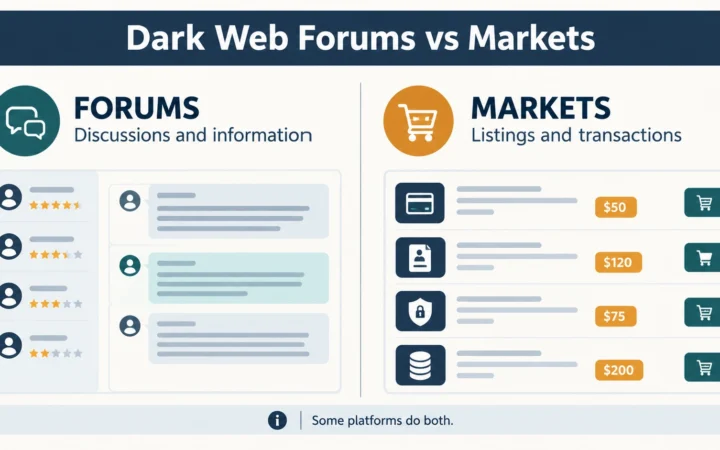
A dark web market is an online marketplace that operates through hidden services or other systems designed to make the website harder to find or trace. Some hidden services have legal uses, but dark web markets have also been used to sell illegal drugs, stolen data, fake documents, and other unlawful goods.
These markets can look like regular shopping websites. They may have product pages, seller profiles, written reviews, and payment systems. The big difference is that many operate outside normal business rules and legal protection.
For example, a normal shopping website may have a known company, a customer support team, and a clear way to ask for a refund. An illegal market may offer no real way to recover money if something goes wrong.
New to this topic? Start with our simple guide How do dark web markets work? Our dark web glossary explains common terms used in reports about hidden websites, and our dark web timeline shows the big events in order.
Why Is Trust a Problem on Dark Web Markets?
Imagine buying something from a stranger online. You cannot see the person, and you may not know their real name. They may live far away, and you have no easy way to contact them if they disappear.
Now imagine that the website itself may be run by people who are breaking the law. There may be no trusted company to protect buyers or sellers. This creates a simple problem: each side has a reason to worry that the other may cheat.
A seller may worry that a buyer will make a false complaint. A buyer may worry that a seller will take the payment and send nothing. Both may also worry about the market owner stealing funds or closing the website.
Researchers call this a trust problem. Studies of darknet markets have looked at the role of reputation systems and payment intermediaries in markets where people cannot easily rely on normal rules or courts.
A 2024 study in the European Sociological Review examined the role of escrow in an illegal online market. It shows that escrow is not simply a payment tool. It can also change how buyers and sellers judge and trust each other.
How Does Dark Web Market Escrow Work?
Escrow is a system in which a third party holds money until certain conditions are met. It is also used in some legal transactions, such as property sales. In a dark web market, the website operator may control the payment held in escrow.
Think of a referee holding the money during a game. The buyer and seller do not hand the money directly to each other. Instead, the referee keeps it until the agreed steps are complete.
A simple example of escrow
- A buyer and seller agree to a transaction.
- The payment is held by the market’s escrow system.
- The seller is expected to meet the agreed terms.
- The market may release the payment after the transaction is marked complete or a dispute is decided.
This is a simple example. The exact rules differ between markets, and a market operator may not follow its own promises.
Escrow can reduce one type of risk: a seller may be less able to take the money immediately and disappear. But it creates another risk because the person or group controlling the escrow may be dishonest.
The market may also freeze payments, make an unfair decision, lose access to its systems, or disappear with the funds. A system that claims to protect both sides is only as trustworthy as the people and technology behind it.
Public court records about the Silk Road investigation describe how the market handled payments and held cryptocurrency during transactions. The case shows how payment systems were part of the way the marketplace operated.
How Do Dark Web Market Reviews and Ratings Work?
Reviews are another way markets try to create trust. A review may describe a seller’s past activity, the quality of an item, or whether a transaction appeared to go as expected.
On a normal shopping website, reviews can help customers compare products. Dark web markets use a similar idea, but the information may be much harder to check.
For example, a profile with many positive reviews may look trustworthy. But those reviews do not prove that the seller is honest. Some may be fake, copied, or written by people working with the seller.
There are other problems, too. A market may remove negative feedback, close old accounts, or allow sellers to create new identities. Even a real review only tells you about one person’s experience at one point in time.
Researchers studying the Hydra darknet market documented features such as feedback, seller reputation, escrow, and dispute handling. This research helps explain how reputation systems became part of the market’s wider structure.
The main lesson is simple: a high rating is not proof of safety. Reviews can create confidence, but they cannot remove the risks of fraud, crime, or a sudden shutdown.
What Are Vendor Bonds?
A vendor is a person or group that sells goods or services. A vendor bond is a deposit or amount of money that a market may require a seller to put up before being allowed to trade.
Think of it like a security deposit. When you rent a home, a landlord may ask for a deposit to cover certain costs if the renter breaks the agreement. A vendor bond uses a similar idea: the market claims that a seller has something to lose by breaking its rules.
In theory, a bond can make a seller think twice before cheating customers or breaking market rules. The market may claim that the deposit can be taken away if a seller acts dishonestly.
But a bond is not a promise that the seller is honest. A dishonest seller may still accept losses, and a market owner may control the deposit unfairly. Buyers may have no independent way to check how the money is handled.
Bond rules also vary between markets. Not every market uses them, and the word does not mean that a seller has been checked by a real bank, court, or government agency.
Escrow, reviews, and bonds try to solve different problems. Escrow deals with payment, reviews share claims about past activity, and bonds aim to give sellers a reason to follow the market’s rules. None of them can guarantee a fair result.
How Can Dark Web Markets Create Evidence for Police?
Some people believe that hidden websites make every user impossible to identify. That is not true. Privacy tools can make an investigation harder, but they do not guarantee that a person cannot be found.
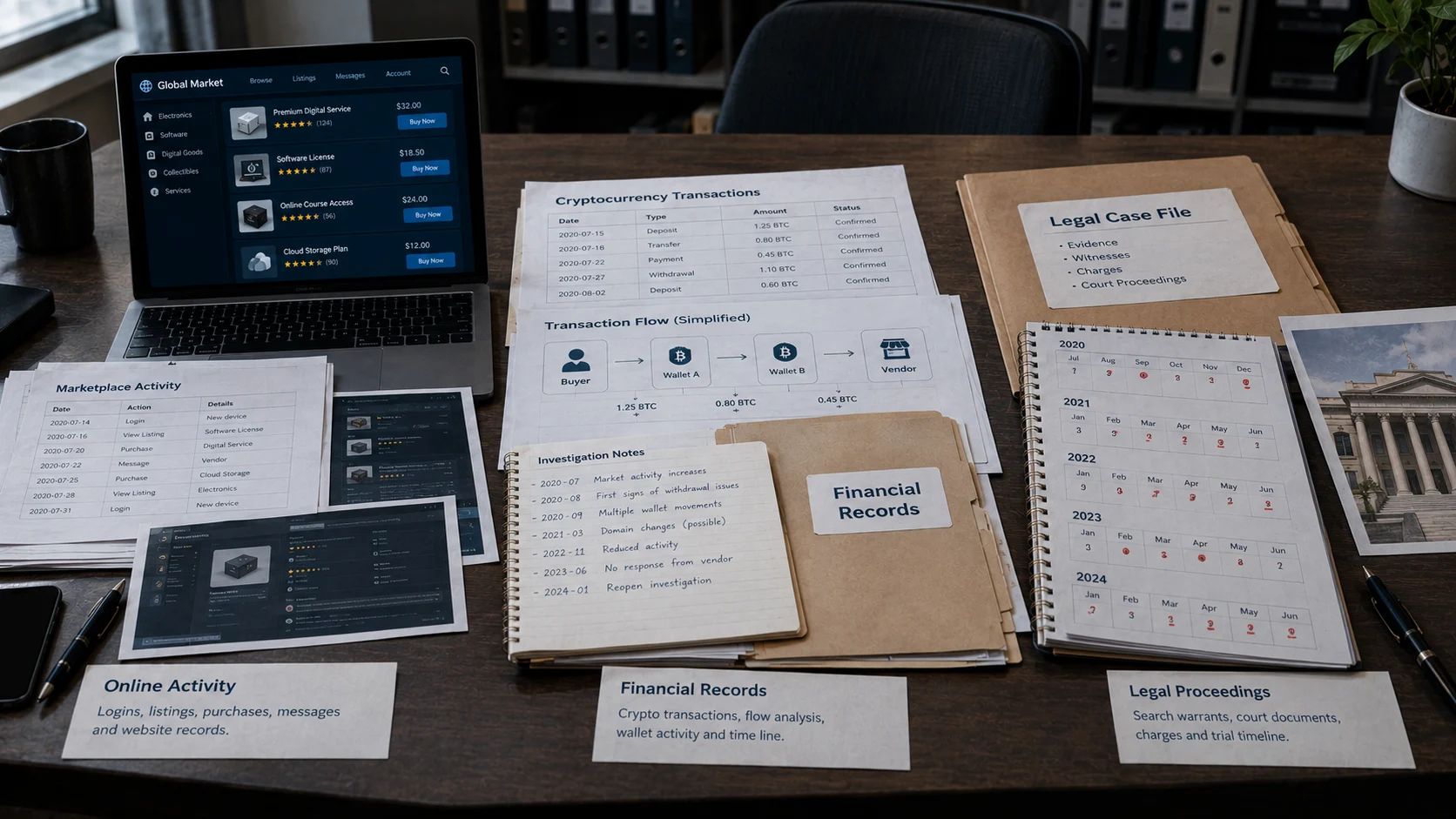
A market may hold records about accounts, messages, orders, payments, and disputes. Sellers may also leave information outside the market, such as shipping records, devices, or links to other accounts. Investigators may compare different types of evidence to understand what happened.
Payment records can also matter. Some digital currencies use public transaction records. These records do not automatically reveal a person’s real name, but investigators may study them alongside other evidence.
The INTERPOL Project Titanium describes work on tools that help investigators study virtual-currency transactions and prepare evidence reports. This shows why digital payment activity can matter in criminal investigations.
Real cases also show that people who operate or sell through hidden markets can be investigated and prosecuted. The US Department of Justice published information about the case of dark web vendor Banmeet Singh, which involved cryptocurrency, online marketplaces, and a large criminal investigation.
Evidence must still be checked and handled under the law. A username or a payment record alone may not tell the whole story. Investigators may need several sources to connect an account, a transaction, and a real person.
For a wider look at major market closures, read 11 major dark web takedowns explained and how police catch dark web criminals. These cases help explain why a website that once seemed stable can suddenly stop working.
Why Do Dark Web Markets Fail?
Dark web markets may use several systems to create trust, but they still face major problems. Their biggest weakness is that users often depend on the same people they cannot fully trust.
1. Scams and stolen payments
A seller may take payment and fail to meet the agreed terms. A market operator may also control money held by the platform and refuse to return it. Reviews and bonds cannot stop every scam.
2. Hacks and data leaks
A market may be attacked by hackers or suffer from poor security. Private messages, account details, payment records, and other data may be exposed. A website that claims to protect its users can still have serious security problems.
3. Market owners disappear
Some market operators have disappeared with money held by their platforms. This is often called an exit scam. When the website owner controls the payment system, users may have little power to recover their funds.
Real example: Empire Market (2018–2020)
Empire Market is a clear example of how trust can disappear overnight. It opened in February 2018, a few months after police shut down AlphaBay. It quickly became one of the biggest dark web markets. According to the U.S. Department of Justice, it handled about four million sales worth more than $430 million.
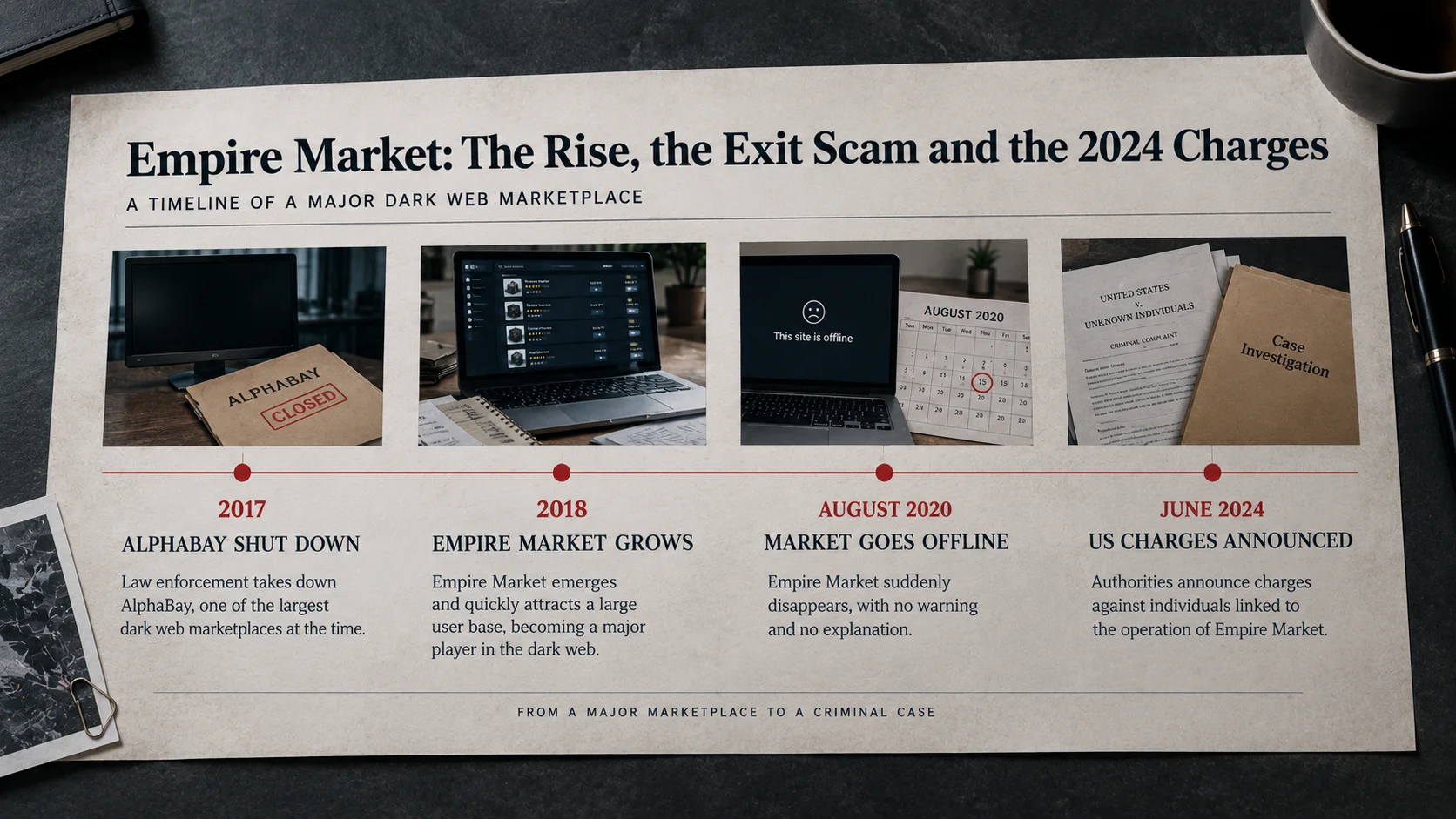
In August 2020, the site suddenly went offline with no warning. Many users believed it was an exit scam, because money held by the market was never returned. This shows the main weakness of escrow: if the market owners hold the money, users must trust the owners too.
The story did not end there. In June 2024, U.S. prosecutors charged the two men who ran the market. Both later pleaded guilty, and in October 2026 one of them was sentenced to 40 years in prison. Market records and cryptocurrency payments helped investigators build the case.
Empire was not the only market to vanish with users’ money. Read how the Sheep Marketplace exit scam played out in 2013, or see three more cases in our guide to dark web exit scams.
4. Police take down the website
Law enforcement agencies may investigate a market, seize its servers, or arrest people linked to its operation. A shutdown can remove the website and may expose records that help an investigation.
The joint EUDA and Europol report on drugs and the darknet reviews how these markets work and the challenges they create for law enforcement. Research on past markets also shows that closing one platform does not always end the wider network.
These problems explain why trust systems cannot make an illegal marketplace safe or stable. The people running it, the technology it depends on, and the risk of law enforcement action can all change the outcome.
How to Stay Safe Online
You do not need to visit illegal marketplaces to learn about online risks. A few basic habits can help protect your accounts and personal information.
- Use a different, strong password for every important account.
- Turn on two-step login where it is available.
- Do not open unexpected links or files from strangers.
- Keep your phone, computer, and apps updated.
- Be careful with websites that promise easy money or guaranteed privacy.
- Never assume that a high rating or a hidden website proves that someone is trustworthy.
Curious about visiting the dark web just to look around? First read Is it safe to go on the dark web? It explains five real dangers in plain words. You can also visit our sources and research page to see how we check information.
Common Questions
How do dark web markets work?
Dark web markets are online marketplaces that may use seller profiles, reviews, payment systems, and dispute rules. Some have used escrow and vendor bonds to create trust. These systems do not prevent every scam or protect users from legal risks.
What is escrow on a dark web market?
Escrow is a system where a third party holds payment until certain conditions are met. On a dark web market, the platform may control the money. This can reduce some risks, but the platform itself may be dishonest or lose the funds.
Can dark web market reviews be trusted?
Not completely. Reviews may be fake, incomplete, or controlled by the seller or website owner. A positive rating does not prove that a person or market is safe.
What is a vendor bond?
A vendor bond is a deposit that some markets require sellers to provide. It is meant to give sellers a reason to follow market rules. It does not guarantee honest behavior or protect buyers from every loss.
Can police trace dark web market activity?
Yes, some activity can be investigated. Investigators may examine website records, devices, messages, payment activity, and other evidence. Hidden services and privacy tools do not guarantee that a person cannot be identified.
Why do dark web markets shut down?
Markets may shut down because of scams, stolen funds, hacking, technical problems, or law enforcement action. A market owner may also disappear without warning, leaving users unable to access the site or recover money.
Helpful Research Links
These research papers and official sources provide more information about dark web markets, escrow, digital payments, and investigations.
- European Sociological Review: Trust intermediaries in a cryptomarket
- Criminology & Public Policy: Hydra market research
- EUDA and Europol: Drugs and the darknet
- INTERPOL: Project Titanium
- US Department of Justice: Dark web vendor case
- US Department of Justice: Silk Road payment records
For more related reading, see our beginner guide How do dark web markets work?, the dark web glossary, the dark web timeline, and our sources and research page.
The Short Version
Dark web markets use systems such as escrow, reviews, and vendor bonds to create trust between people who may not know each other. Escrow holds payment, reviews share claims about past activity, and bonds give sellers a reason to follow market rules.
But none of these systems guarantees safety. Sellers can scam buyers, market owners can steal funds, hackers can expose data, and police can shut down websites. Digital records may also help investigators understand what happened.
The main lesson is simple: a website can look organized and still be risky. Understanding how these systems work helps explain both the rise and the failure of dark web markets.
About DeepHiDX: We explain online privacy, scams, and cybercrime in simple language so readers can understand the risks and make better decisions.



Comments