

By Ehtijad Ali
Updated: October 2026
Reading time: about 11 minutes
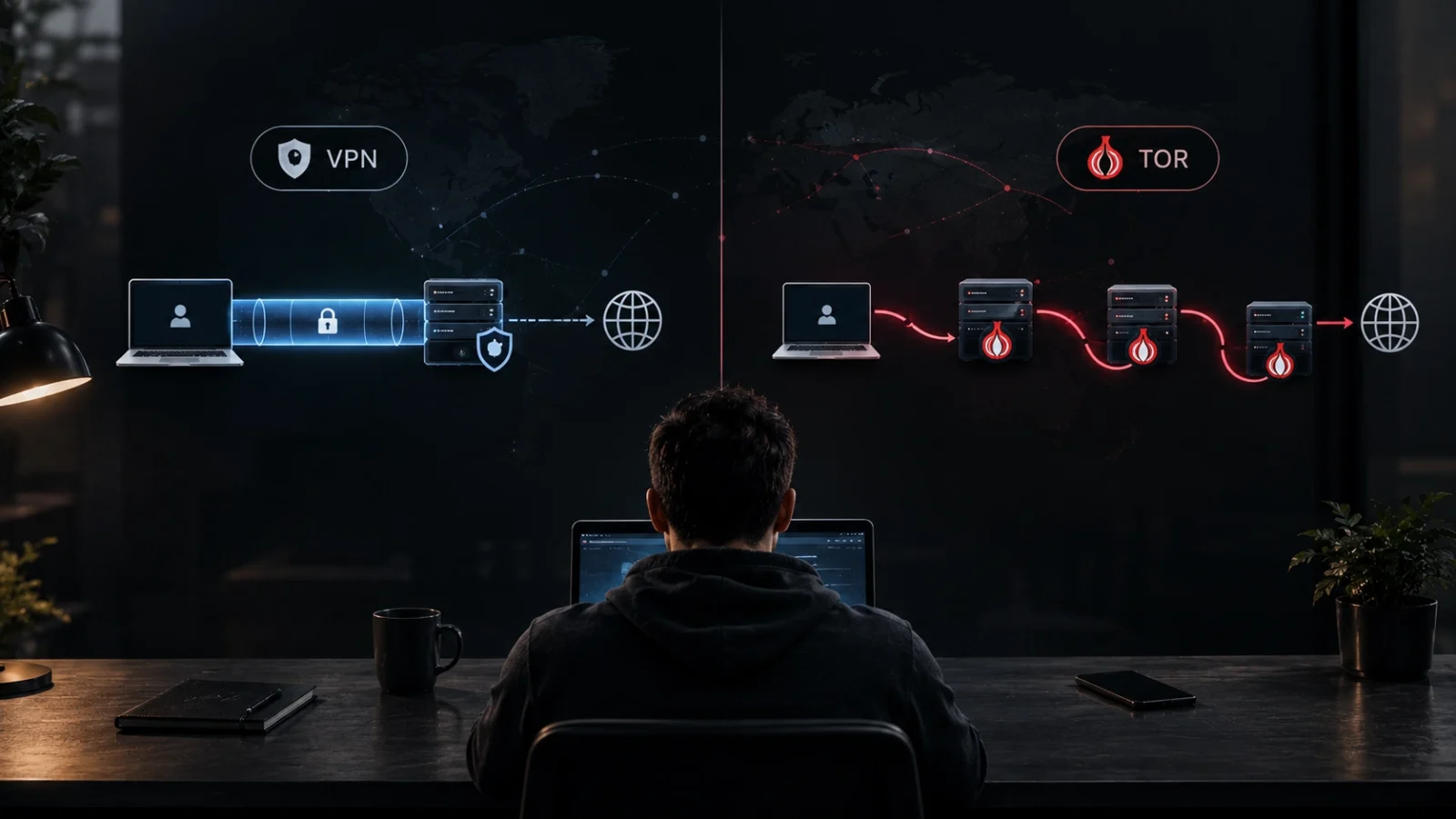
Tor vs VPN which is better? There is no single answer for everyone.
A VPN is often the easier choice for normal daily browsing. Tor can give you stronger anonymity in situations where hiding your connection and identity matters more. Sometimes you may not need either one.
The important question is not just, “Which tool is better?” The better question is, “What am I trying to protect myself from?”
That is called your threat model. In simple words, it means knowing who you are worried about and what information you want to keep private.
This guide compares Tor and VPNs in simple language. You will see which one fits common situations, why using both is not always better, and when neither tool is the right answer.
What is in this guide?
Start with your threat model
Before asking Tor vs VPN which is better, take a minute to think about what you need.
Ask yourself these four questions:
- Do I mainly want to protect my connection from people on the same Wi-Fi network?
- Do I want websites to see a different IP address?
- Do I need stronger anonymity while browsing?
- Do I need to access a website or service that is blocked on my network?
Your answers matter because Tor and VPNs solve different problems.
For example, if you are using public Wi-Fi and simply want a safer connection, a VPN may be practical. If your main goal is stronger anonymity, Tor may be a better fit.
EFF also explains that the best privacy or censorship tool depends on your threat model. There is no tool that gives every person the same level of protection in every situation.
Tor vs VPN: the simple answer
Here is the short answer:
- Choose a VPN if you want an easier tool for everyday use, public Wi-Fi, changing your IP address, or reaching services available in another location.
- Choose Tor if stronger anonymity and resistance to tracking are more important than speed and convenience.
- Use both only when you understand why. More tools do not always mean more privacy.
- Use neither if your problem can be solved with normal HTTPS, good passwords, two-factor authentication, and careful browsing.
The Tor Project says Tor Browser sends traffic through the Tor network and is designed to hide your real IP address and protect against tracking and surveillance. It also includes protections against browser fingerprinting.
A VPN works differently. Your traffic goes through a VPN server instead of going directly from your device to the website. This can hide your IP address from the website and can help protect your connection from local network observers. However, you are placing trust in the VPN provider.
Simple words to know first
- IP address: a number that works like your device’s home address on the internet.
- Encrypted: scrambled, so other people cannot read it.
- Relay: a computer in the Tor network that passes your traffic to the next stop.
- HTTPS: the lock icon in your browser. It means your connection to that website is encrypted.
- Browser fingerprinting: when websites recognize you from small details about your browser and device. Learn more in what information your browser shares.
- CAPTCHA: the “prove you are not a robot” puzzle some websites show.
What is a VPN?
A VPN, or Virtual Private Network, creates an encrypted connection between your device and a VPN server. Encrypted means your data is scrambled, so other people on the network cannot read it.
Think of it like a private tunnel. Your internet connection enters the tunnel and comes out at the VPN server. Websites then normally see the VPN server’s IP address instead of your home IP address.
This can be useful when you use public Wi-Fi at a hotel, airport, school, cafe, or other place where you do not fully trust the network.
A VPN can also be useful when you need a connection from another location. However, a VPN does not make you completely anonymous.
Your VPN provider can become an important part of your privacy model. EFF notes that VPN providers can still have access to information about your traffic and may be subject to legal requests or logging rules.
That is why choosing a VPN is not simply about finding the fastest app. You should also look at its privacy policy, company history, security record, and what information it says it collects.
What is Tor?
Tor is short for The Onion Router. Most people use it through Tor Browser.
Instead of sending your connection through one private server, Tor sends it through several relays in the Tor network. A relay is a computer, usually run by a volunteer, that passes your traffic along to the next stop. Each relay handles part of the connection.
This design makes it harder for one observer to connect your real IP address with the website you are visiting.
Tor Browser also has privacy features that help reduce tracking and browser fingerprinting. This is one reason Tor is different from simply using a normal browser with a proxy.
But Tor has limits. It can be slower than normal browsing, and some websites may show more CAPTCHAs or block Tor connections. Research has also found that some websites treat traffic coming from Tor differently.
Tor also does not make you magically anonymous. If you log into your normal account and give a website your name, email, phone number, or other identifying details, that website can still know who you are.
Many people who used Tor for crime were caught because of small mistakes like this, not because Tor was broken. You can read real examples in how police catch dark web criminals. Tor is also not the only privacy network. See how it compares with two others in I2P vs Tor vs Freenet.
Tor vs VPN for four common situations
The picture below shows four everyday cases. Two of them point to a VPN, one points to Tor, and one shows that sometimes you need neither.

1. You are using public Wi-Fi
Best choice: VPN for convenience.
If you are using Wi-Fi in a cafe, hotel, airport, or another public place, a VPN can add a layer of protection between your device and the local network.
For normal websites that already use HTTPS, you may not need Tor just because you are on public Wi-Fi. HTTPS already protects the content sent between your browser and the website.
2. You want stronger anonymity
Best choice: Tor Browser.
If your main question is Tor vs VPN for anonymity, Tor is usually the stronger choice because it does not depend on one VPN company to protect the whole path.
Tor uses multiple relays, which is designed so that no single relay should know both who you are and where you are going.
However, you still need to use Tor correctly. Do not install random browser extensions, do not reveal personal information without thinking, and do not assume that Tor makes every action anonymous.
3. You want an easier everyday connection
Best choice: VPN.
If you want something that works with normal apps and websites with less trouble, a VPN is often more practical.
Tor Browser is designed mainly for private web browsing. A VPN can usually cover more of your device’s network traffic, depending on the VPN app and its settings.
This makes a VPN a better fit for people who care about convenience, speed, and simple daily use.
4. A website is blocked on your network
Best choice: it depends.
A VPN may be enough if you simply need to reach a blocked website. Tor can also help with censorship and is designed with stronger anonymity in mind.
If Tor itself is blocked or easy to identify on your network, Tor provides bridges and other tools that can help users connect in restricted networks.
The right answer depends on why the website is blocked and what risks you face.
Speed, reliability, and everyday use
One of the biggest differences between Tor and a VPN is speed.
A VPN usually has fewer network steps, so it is often faster and easier for normal browsing, video calls, downloads, and other daily tasks.
Tor can be slower because your traffic travels through multiple relays around the world. The Tor Project says speed can change based on network load, latency, and other factors.
Tor may also cause more CAPTCHAs or website access problems. Some websites block or limit traffic from Tor because of abuse coming from some Tor exit addresses.
So if your main goal is fast everyday browsing, a VPN will usually be easier.
If your main goal is stronger anonymity, the extra waiting time may be worth it.
Is Tor and VPN together safer?
This is where many comparison articles give a simple answer that is not always correct.
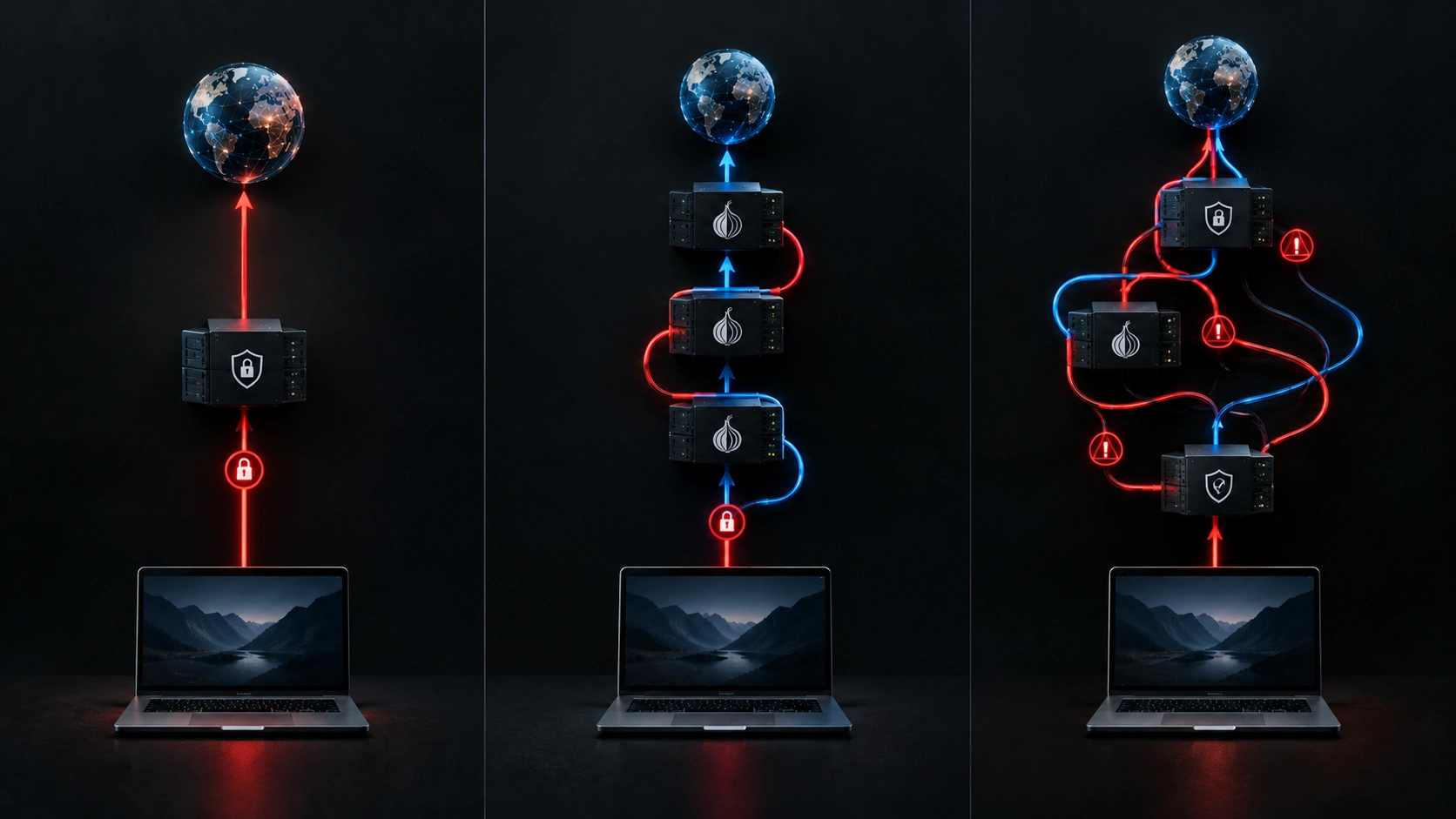
Using Tor and a VPN together is not automatically safer.
The Tor Project says it generally does not recommend using a VPN with Tor unless you are an advanced user who understands how to configure both tools without weakening the privacy protections.
Why? Adding another service adds another part that can fail, leak information, or change the way your traffic looks.
For most people, choosing the correct tool and using it properly is better than simply turning on every privacy tool available.
If you are asking is using Tor and VPN safer, the honest answer is: sometimes, depending on the setup and threat model, but not by default.
When neither is the answer
Not every privacy problem needs Tor or a VPN.
If your main concern is someone stealing your password, a VPN will not fix a weak password. Tor will not fix it either.
Passwords are often stolen in big company leaks, like the ones in our list of the biggest data breaches of 2026. Attackers can even steal login cookies to skip your password, which we explain in our session hijacking guide.
Instead, use a strong and unique password and turn on two-factor authentication.
If you are worried about a website reading your information, first check whether the website uses HTTPS. A VPN does not replace HTTPS, and Tor also does not make an unsafe website trustworthy.
If you are worried about a scam email, neither Tor nor a VPN will stop you from entering your password into a fake website.
Good security habits still matter more than the privacy tool you choose.
Tor vs VPN: simple comparison
| Feature | VPN | Tor |
|---|---|---|
| Easy for daily use | Usually yes | Less convenient |
| Usually faster | Yes | Usually slower |
| Hides your IP from websites | Yes | Yes |
| Uses several relays | No | Yes |
| Strong anonymity focus | Limited | Strong |
| Good for blocked websites | Often | Often |
| Can cause CAPTCHAs | Sometimes | More often |
| Requires trust in a provider | Yes | Different trust model |
The table shows why there is no single winner in the Tor vs VPN which is better question. Each tool solves a different problem.
Quick checklist before you choose:
- On public Wi-Fi and just want a safer connection? A VPN is usually enough.
- Need to hide who you are from websites and people watching your network? Use Tor Browser.
- Worried about stolen passwords or scam emails? Use strong passwords and two-factor authentication. You may not need either tool.
- Still not sure? Go back to the four threat model questions at the top of this guide and answer them one by one.
Questions people ask
Is Tor better than a VPN?
For stronger anonymity, Tor can be better than a VPN. For speed, convenience, and normal everyday use, a VPN is often easier. The right choice depends on your threat model.
Should I use Tor or VPN?
Use a VPN if you want a simple privacy tool for everyday use. Use Tor Browser when stronger anonymity is more important than speed and convenience.
Can a VPN make me completely anonymous?
No. A VPN can hide your IP address from websites and protect your connection from some local observers, but it does not remove every way you can be identified online. Your accounts, browser activity, cookies, and information you share can still identify you. We explain this in more detail in Do VPNs make you anonymous?
Does Tor hide my IP address?
Yes. When you use Tor Browser correctly, websites normally see the IP address of a Tor exit relay instead of your real IP address. Tor also provides protections designed to reduce browser fingerprinting and tracking.
Is Tor slower than a VPN?
Usually, yes. Tor sends traffic through multiple relays, which can add delay. The exact speed depends on the network and the website you are visiting.
Is using Tor and a VPN together better?
Not automatically. The Tor Project advises against combining them unless you understand the setup. More layers can add more problems if they are configured badly.
Can I use Tor for normal browsing?
Yes, but some websites may be slower, show more CAPTCHAs, or block Tor traffic. Tor Browser is designed for privacy, so it can be less convenient than a normal browser.
Does Tor protect every app on my computer?
No. Tor Browser protects traffic from Tor Browser. Other apps do not automatically use Tor. The Tor Project warns users not to assume that other applications are protected just because Tor Browser is running.
How is Tor different from a VPN?
A VPN sends your traffic through one server run by one company. That company can see your real IP address, so you have to trust it. Tor sends your traffic through three volunteer-run relays, and no single relay knows both who you are and which site you are visiting. In short, a VPN moves your trust to one company, while Tor spreads it out. That makes Tor better for anonymity, and a VPN better for speed and everyday use.
VPN vs Tor: which one should a beginner use?
For most beginners, a trusted VPN is the easier choice for public Wi-Fi and everyday browsing. Use Tor Browser when hiding who you are matters more than speed. If you are not sure, look at the four situations above and pick the tool that matches yours.
Is Tor free while a VPN costs money?
Yes. Tor Browser is free and is made by the non-profit Tor Project. Most trustworthy VPNs charge a monthly fee. Be careful with free VPNs: some make money by collecting or selling data about the people who use them.
Helpful links
These are the main sources used for this guide. They are useful if you want to learn more about Tor, VPNs, anonymity, and online privacy.
- Tor Project: About Tor Browser
- Tor Project: Using Tor Browser with a VPN
- Tor Project: Tor Browser speed
- Tor Project: Tor Browser safety tips
- EFF: How to circumvent online censorship
- EFF: Choosing the right VPN
- USENIX: Research on Tor exit blocking
Related reading on DeepHidx
- Dark Web Glossary: Tor, VPN, Threat Model, OPSEC and more
- Do VPNs Make You Anonymous? What a VPN Really Hides
- Deep Web vs Dark Web: The Simple Difference
- Dark Web Timeline: Important Events and Security History
- What Information Does My Browser Share?
The short version
Tor vs VPN which is better? It depends on what you need.
Choose a VPN when you want an easy tool for everyday browsing, public Wi-Fi, speed, and simple IP protection.
Choose Tor Browser when stronger anonymity and protection against tracking are more important than speed and convenience.
Do not assume that using Tor and a VPN together is always safer. The setup matters.
And remember: no privacy tool can replace good security habits. Use strong passwords, turn on two-factor authentication, use HTTPS, keep your software updated, and think before sharing personal information.
The best privacy tool is not always the one with the most features. It is the one that fits the problem you are actually trying to solve.



Comments