

By Ehtijad Ali
Updated: October 2026
Reading time: about 8 minutes
Imagine someone offers you an easy online job. They promise good money for a few minutes of work. All you need to do is receive money in your bank account and send it to another person. You can even keep a small part of the money.
It sounds like a simple way to earn money. But there may be a serious problem: the money could have been stolen from someone else.
This is how criminals sometimes recruit a money mule. They use students, job seekers answering fake job offers, and even people looking for love to move money from online scams. Some people know what they are doing. Others do not understand that they are helping criminals.
In this guide, you will learn what a money mule is, how these scams work, the warning signs to watch for, and what to do if someone has used your bank account to move stolen money.
Table of Contents
What Is a Money Mule?
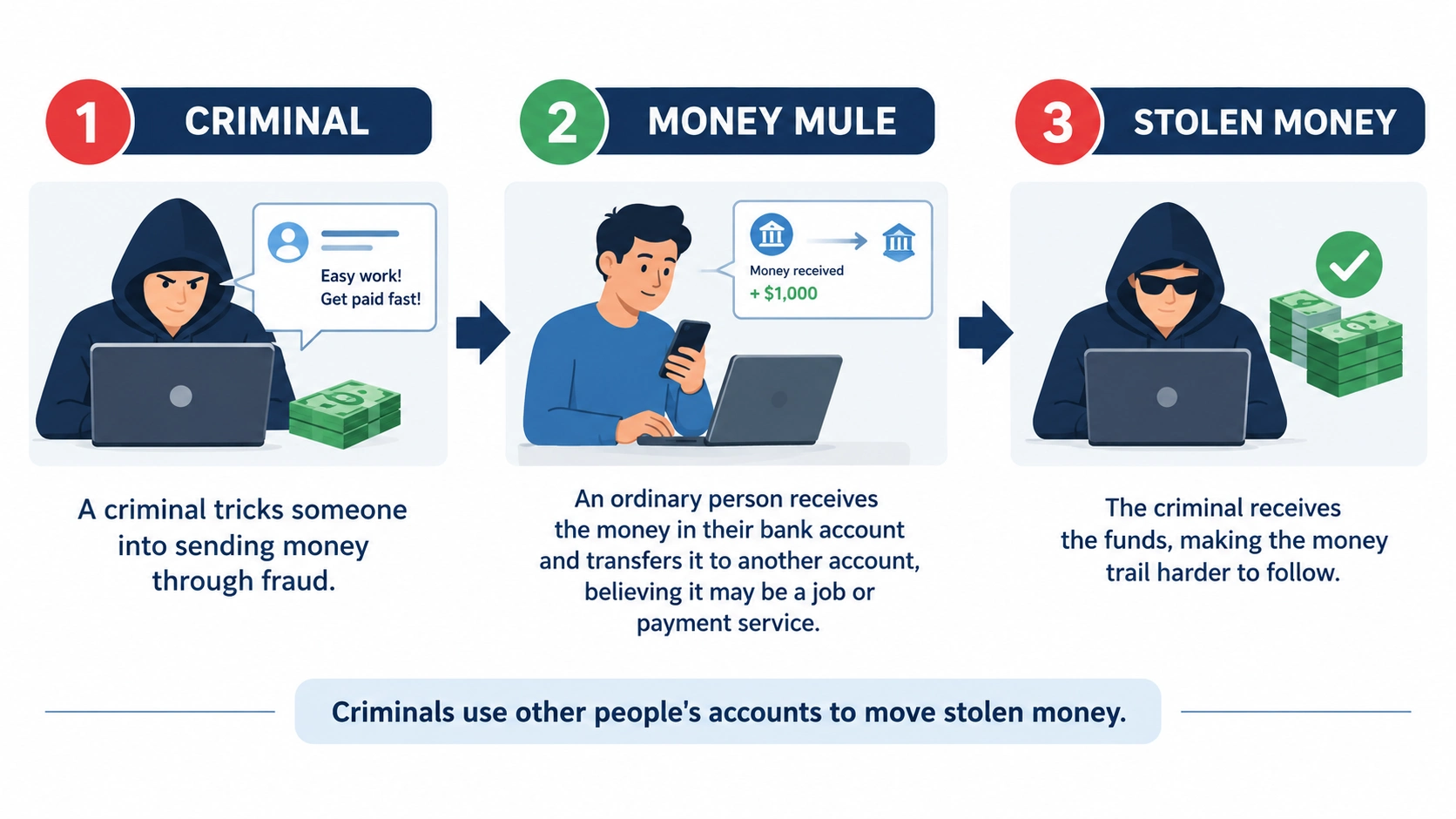
A money mule is a person who receives and moves money for someone else when that money comes from crime. The person may transfer it to another bank account, withdraw cash, buy cryptocurrency, or hand the money to someone else.
Criminals use money mules to make it harder to follow stolen money back to them. Instead of using their own accounts, they use other people’s accounts to move the money.
For example, imagine a scammer tricks a person into sending $1,000. The scammer then asks a second person to receive that money and send it to another account. The second person is acting as a money mule, even if they believe they are doing a normal job.
According to the FBI’s money mule guide, criminals recruit people through fake jobs, online relationships, and other offers. Some recruits do not know that the money they move is stolen.
How Does a Money Mule Scam Work?
A money mule scam often follows a simple pattern. First, a criminal finds someone who needs money, trusts a stranger, or wants a new job. Next, the criminal asks that person to receive or move money. Finally, the money is sent somewhere else, while the criminal tries to hide their identity.
Step 1: A criminal finds a target
The criminal may send a message on social media, post a fake job, or start a conversation on a dating app. They often promise quick money or give a believable reason for needing help.
Step 2: They ask to use your account
The person may say their business cannot receive payments directly. They might claim they work overseas, have a banking problem, or need a local person to handle payments.
Step 3: You receive and move the money
You may be told to send the money to another account, withdraw it, or buy cryptocurrency. The criminal might let you keep a small amount as your payment.
Step 4: The real owner reports the theft
Later, the person whose money was stolen may report the fraud to their bank or the police. The money trail may lead to your account because your name appears on the transactions. Your account could be restricted while the bank reviews what happened.
The important lesson is simple: never let a stranger use your bank account to receive and forward money.
How Do Criminals Recruit Money Mules?
Criminals do not always tell people what they are really doing. They often use everyday situations to make a dangerous request seem normal.
1. Fake jobs that promise easy money
A fake employer may advertise a remote job such as payment assistant, money transfer agent, or account manager. They promise good pay for very little work. After contacting you, they ask you to receive payments in your own bank account and send them somewhere else.
Students and job seekers can be easy targets because they may be looking for their first job or extra income. A real job should have clear duties, a real employer, and a proper payment process. It should not require you to move unknown money through your personal account.
2. Easy-money posts on social media
You may see a post saying you can earn money by receiving payments, sending transfers, or buying cryptocurrency for someone else. The person may claim that the work is legal and risk-free.
These offers can appear in Facebook groups, Instagram messages, WhatsApp chats, Telegram channels, and job websites. Europol warns that criminals use fake job offers and social media to recruit money mules.
3. Romance and friendship scams
A stranger may spend weeks or months building a relationship with you online. They may act caring and friendly until they ask you to receive money for them.
They might say they cannot access their bank account or need help receiving a payment. Because you trust them, you may agree without asking questions. But the money could belong to a scam victim.
Read our guide to pig butchering scams to learn how criminals use online trust to steal money.
A Simple Example: How Sara Almost Became a Money Mule
Here is a made-up story that shows how this kind of scam can happen to anyone.
Sara is 19 and wants a part-time job she can do from home. One evening, a stranger named “Daniel” sends her a message on Instagram. He says his company needs “payment assistants” and offers her $400 a week.
Daniel says the work is easy. Money will arrive in Sara’s bank account. She can keep $50 and must send the rest to another account. He even sends her a contract with a company logo, so everything looks real.
Before saying yes, Sara asks her older brother for advice. He searches for the company and finds no real office, no history, and no reviews. He also points out something important: a real company never needs a worker’s personal bank account to move its own money.
Sara says no and blocks Daniel. Later, she sees the same “job” posted in other online groups. If she had accepted, the money in her account could have been stolen from a scam victim. Her bank account could have been frozen, and she could have been questioned by the police.
The lesson: if a job is mostly about receiving money and sending it to someone else, stop. Talk to a parent, a teacher, or your bank before you do anything.
7 Warning Signs of a Money Mule Scam
Be careful if a job offer, online friend, or stranger shows any of these warning signs:
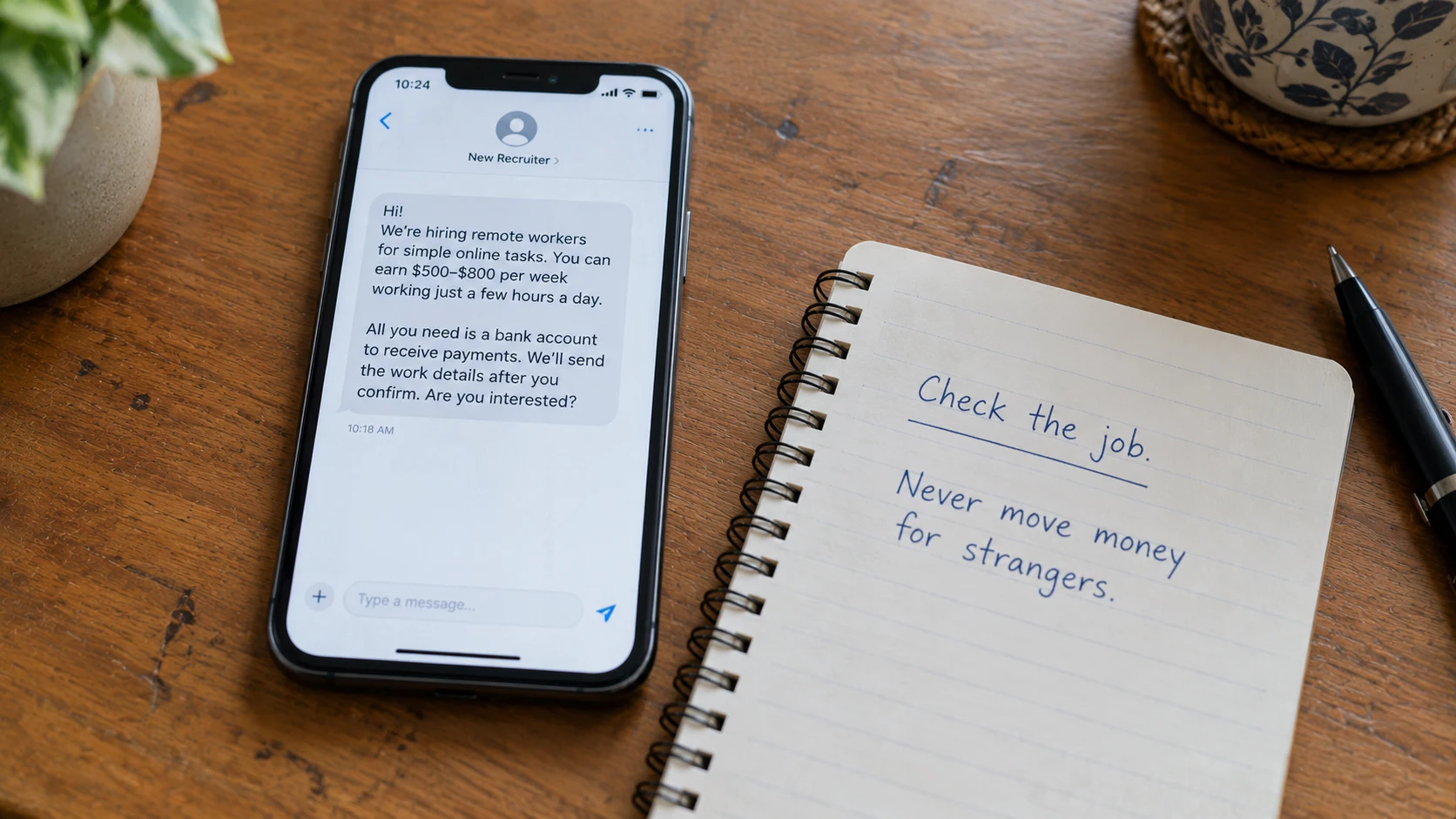
- Easy money for little work: You are promised a high payment for doing almost nothing.
- Use your personal bank account: Someone asks you to receive money and forward it to another person.
- Keep a commission: You are allowed to keep part of every transfer you make.
- No clear job duties: The employer cannot explain what the company does or why it needs your account.
- Pressure to act quickly: They tell you to accept the offer now or lose the chance.
- Requests for private details: They ask for your banking password, PIN, card security code, or one-time login code.
- Move money through crypto: They ask you to buy cryptocurrency or send it to a wallet they control.
Real Job vs. Money Mule Job: Spot the Difference
Not sure if a job offer is real? Compare it with these two simple lists.
Signs of a real job
- You applied through a real company or a trusted job website.
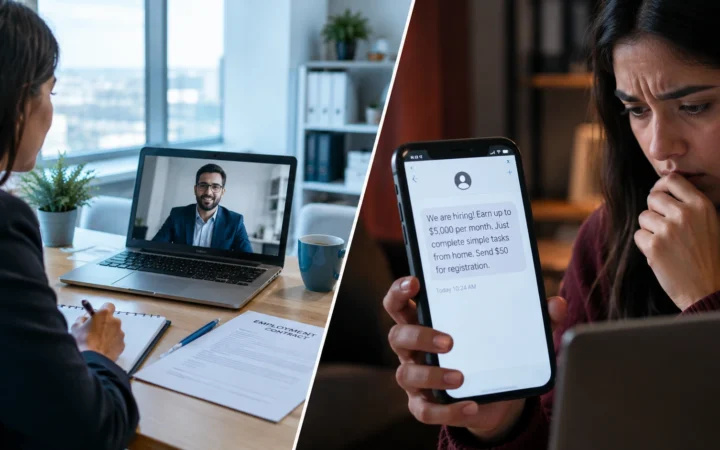
- You had a real interview, often by video or face to face.
- The work has clear tasks, like writing, selling, or helping customers.
- The company pays you a salary or fee.
- Your bank account is only used to receive your own pay.
- Nothing is secret, and you are never asked to lie to your bank.
Signs of a money mule scam
- A stranger messaged you first.
- There was no real interview, only chat messages.
- The main task is receiving money and sending it somewhere else.
- You are told to keep part of the money you move as your pay.
- Your bank account is used to move other people’s money.
- You are asked to keep it secret or lie to your bank.
If a job offer matches even one point on the scam list, stop and check it with a parent, a teacher, or your bank before you share any account details. Asking one simple question is always better than losing your money or your bank account.
One warning sign does not prove that a person is a criminal. However, a request to use your personal bank account to move someone else’s money is a serious reason to stop and check.
Is Being a Money Mule Illegal?
Moving stolen money can be a crime. The exact law and possible punishment depend on the country, the facts, and what the person knew or did.
Some people agree to help criminals because they want the money. Others are tricked by a fake job or someone they trust. Not knowing about the crime does not always protect a person from legal or financial trouble.
Your bank may freeze or close your account, ask questions about the transfers, or report suspicious activity. You may also lose money, face a police investigation, or have trouble opening another account. The outcome depends on the case and local law.
Europol’s money muling safety guide explains how criminals recruit people and why moving money for strangers can have serious consequences.
Police in many countries work together to follow stolen money and shut down criminal networks. For a real example of how this teamwork happens, read our easy guide to Operation Onymous, the 2014 raid that took down several dark web markets.
What to Do If You Think You Are Being Used
If you have already received money or made a transfer for someone who may be involved in a scam, do not panic. Take these steps as soon as you can.
1. Stop moving the money
Do not send more money, withdraw cash for the stranger, or buy cryptocurrency for them. Do not try to fix the situation by making another transfer.
2. Contact your bank or payment service
Use the official phone number or website to explain what happened. Ask what you should do with any money still in the account. Do not return it to a different account just because the stranger tells you to.
3. Keep the evidence
Save messages, emails, job advertisements, usernames, payment records, and transaction details. Do not change or delete evidence that could help your bank or the police understand what happened.
4. Report the scam
Contact your local police or the official cybercrime reporting service in your country. If you are in the United States, you can report suspected internet crime through the FBI Internet Crime Complaint Center.
5. Protect your accounts
If you shared login details or private information, change affected passwords, turn on two-step login, and tell your bank. Never share your PIN, banking password, or one-time security codes with a recruiter or online friend.
Scammers sometimes use leaked personal details to pick targets. If you think your email or other data has been exposed online, our guide Is Dark Web Monitoring Worth It? explains what these services can and cannot find.
If you are unsure what to do next, ask your bank and the relevant authorities for guidance. Do not take advice from the person who asked you to move the money.
How to Protect Yourself From Money Mule Scams
- Research a company before accepting a job offer.
- Check that the company’s website and contact details are real.
- Never allow a stranger to use your bank account.
- Do not accept money from someone who asks you to forward it elsewhere.
- Be careful when an online friend or romantic partner asks for banking help.
- Never share your banking password, PIN, or one-time login codes.
- Talk to someone you trust before accepting a suspicious offer.
It also helps to understand terms such as money laundering and other dark web terms. Learning how criminals hide stolen money can help you spot warning signs before you get involved.
Frequently Asked Questions
What is a money mule in simple words?
A money mule is someone who receives and moves money for another person when that money comes from crime. Criminals may use the person’s bank account to make stolen money harder to trace.
Can students become money mules without knowing?
Yes. A student may accept a fake online job or trust someone who promises easy money. They may not know the funds are stolen, but they can still face serious problems. Never use your account to move money for an unknown person.
What if I have already transferred the money?
Stop making transfers and contact your bank or payment service immediately. Save the messages and payment records, then report the situation to the relevant authorities. Do not make another transfer to try to fix it yourself.
Can I keep the commission I received?
Do not assume the money is yours to keep. Tell your bank what happened and follow its instructions. The money may be linked to a crime, and your legal responsibilities depend on the facts and local law.
How can I tell if a remote job is a money mule scam?
Be suspicious if the job offers easy money but asks you to receive payments into your personal account and send them elsewhere. Check the employer independently and never agree to move money for a stranger.
Helpful Links and Official Sources
These trusted sources explain money mule scams, warning signs, and ways to protect yourself.
- FBI: Money Mules — how money mules are recruited and how to stay safe.
- Europol: Money Muling — common recruitment methods and warning signs.
- FBI IC3 — report suspected internet crime in the United States.
- Consumer Financial Protection Bureau — what a money mule is and how to avoid becoming one.
- UK National Crime Agency — money muling risks and safety advice.
The Short Version
A money mule is someone who moves stolen money for criminals. Criminals may use fake jobs, easy-money posts, or online relationships to get access to a person’s bank account.
Never let a stranger use your account to receive and forward money. If you think you have been used, stop making transfers, contact your bank, save the evidence, and report the incident. Acting quickly can help protect you and others from further harm.

Comments