

By Ehtijad Ali
Updated: October 2026
Reading time: about 8 minutes
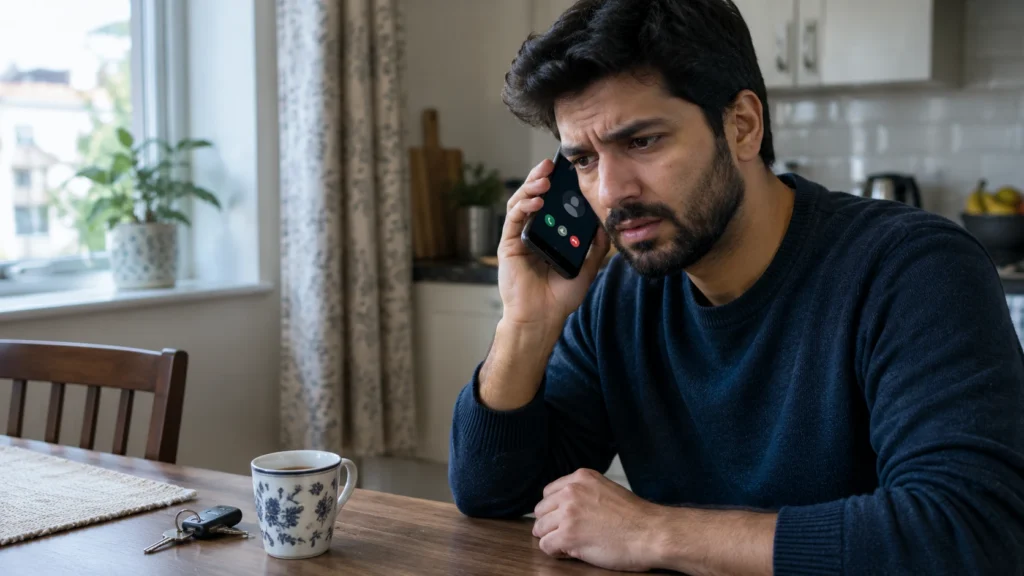
Imagine getting a phone call from your son, daughter, or brother. They sound scared. They say they are in trouble and need money right away. You know their voice, so you believe them.
But what if the voice is fake?
An AI voice cloning scam uses computer tools to copy a person’s voice. A scammer can use that fake voice to pretend to be someone you love. They may claim there has been an accident, that someone is in the hospital, or that they need money to get out of trouble.
The call may sound real, but the story may be a lie. The goal is to make you feel afraid and send money before you have time to think.
In this guide, you will learn how AI voice cloning scams work, how to spot a fake family emergency call, and how to protect the people you care about. You will also learn how a simple family code word can help you check whether a caller is telling the truth.
What is in this guide?
What Is an AI Voice Cloning Scam?
An AI voice cloning scam is a type of fraud in which someone uses artificial intelligence (AI) to copy another person’s voice. The scammer then uses that voice to trick people into sharing private information or sending money.
AI voice tools can learn how a person sounds from a recording. They can copy parts of the person’s voice, such as their tone and way of speaking. Some tools can create new speech that sounds much like the real person.
For example, a scammer may find a public video of your brother talking online. They may use the audio to make a fake voice recording. Later, they call you and pretend to be him.
The caller might say, “I have had an accident. Please send money now. I cannot explain everything, but I need your help.”
You may believe the call because the voice sounds familiar. However, a copied voice does not prove who is speaking.
The US Federal Trade Commission (FTC) warns that scammers can use short audio clips to copy the voices of family members. Read its guide on fake family emergency scams to learn more.
How Do Scammers Copy a Voice?
You might think a scammer needs hours of recordings to copy someone’s voice. That is not always true. Some voice cloning tools can create a similar voice from a short audio sample, although the results depend on the tool and the recording.
Here is how a scam may happen:
- They find a voice recording. A scammer may find a public video, social media post, or other recording of the person they want to copy.
- They create a fake voice. They use an AI tool to make new speech that sounds like that person.
- They contact a family member. The scammer calls or sends a voice message and pretends to be someone the victim knows.
- They ask for something valuable. They may demand money, account details, a payment code, or other private information.
Scammers also make fake profiles to learn about your family, such as names, trips and school details. Learn the warning signs in our guide on how to spot a fake social media account.
Research into voice cloning shows how computer systems can create speech that sounds like a real speaker. These tools can have useful purposes, too, such as helping people who have trouble speaking. The danger comes when someone uses them to fool others.
The FBI has also warned about criminals using AI-generated voices to pretend to be trusted people. Read the FBI warning about AI-generated voice messages.
Common Warning Signs of a Fake Family Call
An AI voice cloning scam often uses the same tricks as other phone scams. The scammer wants you to feel afraid, act quickly, and avoid checking the facts.
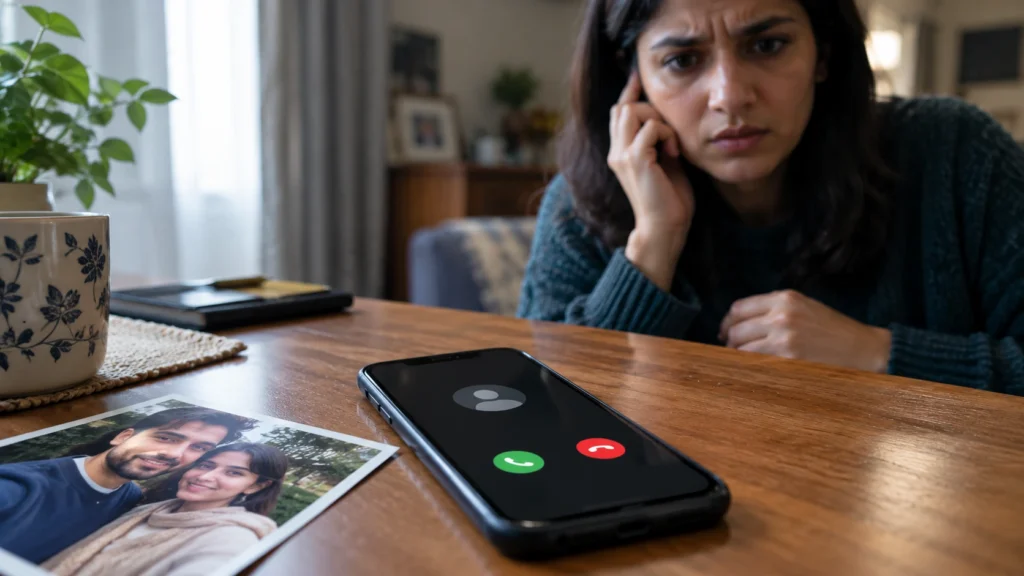
1. The caller says there is an emergency
The caller may claim that your child has been in an accident, your brother has been arrested, or your parent needs urgent medical help. The story is meant to make you worry.
2. They demand money right away
The caller may tell you to send money within minutes. They may ask for a bank transfer, a payment app transfer, gift cards, or cryptocurrency. Do not send money just because someone sounds like a family member.
3. They tell you to keep it secret
A scammer may say, “Do not tell anyone. Only you can help me.” They do this because another family member might discover the lie. Always contact someone you trust before making an urgent payment.
4. They refuse to let you check the story
The caller may become angry when you ask questions. They may tell you not to hang up or claim that there is no time to call anyone else. This pressure is a warning sign.
Remember that a real emergency can happen, too. These signs do not prove that a call is fake, but they are reasons to stop and check. Learn more in our guide to spotting scam messages.
Real Call or Fake Call? A Quick Check
You cannot always hear the difference between a real voice and a cloned one. But you can notice how the caller acts. Use this table as a quick guide.
| What happens on the call | A real family member | A likely scammer |
|---|---|---|
| You say you will call them back | Says yes, that is fine | Says there is no time, or begs you not to |
| You ask for the family code word | Knows it | Avoids the question or gets upset |
| How they want money sent | Rarely asks for money in a rush | Gift cards, wire transfers, crypto or a courier at your door |
| Secrecy | Fine with you telling others | Says “Do not tell Mom” or “Keep this secret” |
| Number on your screen | Usually their normal number | Unknown, hidden, or even a copied number |
If even one thing on the right side happens, stop. Hang up and check the story yourself before you do anything else.
A Simple Story: The Call That Almost Worked
Here is a short story that shows how fast this can happen. Amina gets a call in the evening. It sounds just like her younger brother, Bilal. He is crying. He says he crashed a car and needs money right away so he does not get in trouble.
Then a second voice comes on the line. The man says he is a lawyer. He tells Amina to send money with a gift card and to keep it secret from the rest of the family.
Amina feels scared, but she remembers one rule: stop and check. She says, “I will call you right back.” Then she calls Bilal on the number saved in her phone. He answers from home. He is fine, and he never made that call.
The voice sounded real, but the story was fake. A ten-second call back saved Amina’s money. That is the most important habit in this whole guide.
Set Up a Family Code Word
One simple way to fight an AI voice cloning scam is to create a family code word. This is a private word or short phrase that family members agree to use when they need to check who is speaking.
Choose a word that is easy to remember but hard for other people to guess. Avoid names, birthdays, pet names, and details that strangers could find on your social media accounts.
Keep the word private. Do not post it online or share it in public videos. Make sure the family members who need it know how and when to use it.
How to use the code word
- Stop. If someone calls with a frightening story and asks for money, do not pay at once.
- Ask for the code word. Ask the caller to give the private word your family agreed on. Do not say the word first.
- Check another way. If the caller cannot give the correct word, or anything feels wrong, end the call and contact the family member using a phone number you already know.
A code word is helpful, but it is not perfect. A real family member might forget it, and a scammer might learn it. Always check an emergency through a second, trusted way before sending money.
What to Do If You Receive a Fake Call
If you think someone is using a copied voice to trick you, stay calm. You do not need to solve everything during the call. Take these steps to protect yourself.
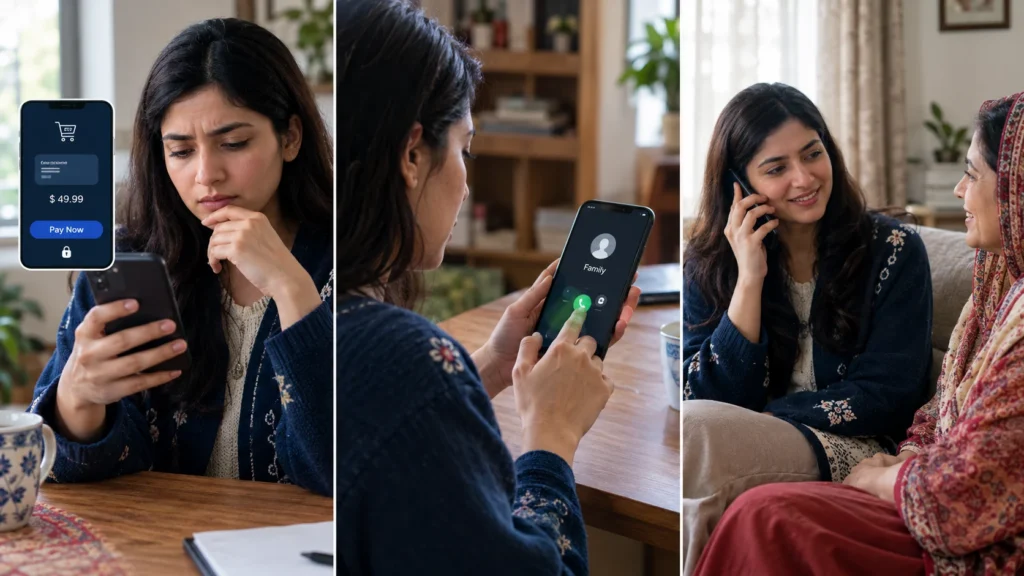
Step 1: Do not send money
Do not send money, share a bank code, reveal a password, or give away private details during the call. Even if the voice sounds real, take time to check the story.
Step 2: Call your family member directly
Hang up and call the person on their usual phone number. Do not rely on a number given by the caller. You can also send a message through a contact method you have used before.
Step 3: Ask another trusted person
If the person does not answer, contact another family member or close friend. Ask them to check whether the emergency is real. If someone may be in immediate danger, contact the proper emergency service in your area.
Step 4: Save the details and report the scam
If it is safe to do so, keep the caller’s number, messages, payment details, and call times. Report the scam to your local police or cybercrime reporting service. If you are in the United States, you can report fraud through the FTC’s official fraud reporting website.
If you have already sent money, contact your bank or payment provider as soon as possible. Ask whether the payment can be stopped or recovered. Quick action may help, but recovery is not guaranteed.
How to Protect Your Family From Voice Cloning Scams
You do not need to be a computer expert to protect your family. A few simple habits can make these scams harder to carry out.
- Create a private family code word and agree on how to use it.
- Keep personal phone numbers and private details away from public posts when possible.
- Be careful about posting long voice recordings or videos publicly. Our guide to the most important privacy settings shows how to make your accounts private.
- Never send money just because a caller says there is an emergency.
- Check urgent requests using a trusted phone number or another contact method.
- Tell children, parents, and older relatives about AI voice cloning scams.
- Use strong, different passwords and turn on two-step login for important accounts.
It also helps to learn how other online tricks work. Read our dark web glossary to understand terms such as deepfake and social engineering. Knowing how scammers use fear and trust can help you spot many types of fraud.
For more practical advice, read the FTC guide to spotting phishing scams. The same basic rule applies to calls, emails, and text messages: check who contacted you before sharing information or paying.
Frequently Asked Questions
Can an AI voice cloning scam sound exactly like my family member?
Some voice clones can sound very close to the real person. The quality depends on the recording and the tool. You should never use the sound of a voice alone to prove who is calling.
How much audio does a scammer need to copy a voice?
Some tools can create a similar voice from only a short audio clip. Other tools may need more audio. There is no single amount that applies to every system.
Can I trust a video call instead of a phone call?
Not completely. AI can also create fake images and videos. If someone asks for urgent money, verify the request through a separate contact method you already trust.
What should I do if I already sent money?
Contact your bank or payment provider immediately. Explain what happened and ask whether the payment can be stopped. Save any messages and payment records, then report the fraud to the proper authorities.
Does a family code word stop every voice cloning scam?
No. It is one useful safety step, not a complete solution. Combine it with a direct callback, a second trusted contact, and a rule that no one sends money before checking an emergency.
Can scammers fake the phone number too?
Yes. Scammers can use a trick called caller ID spoofing to make a call look like it comes from a number you know. That is why you should hang up and call back on a number you already have saved, not the one that called you.
Are grandparents the main target?
Older people are often targeted in “grandparent scams,” but anyone can get one of these calls. Parents, children, brothers and sisters can all be tricked. Share this guide with everyone in your family, young and old.
Should I stop posting videos online?
You do not have to stop. But it is smart to make your accounts private, share videos only with people you know, and avoid posting long clips where you talk a lot. Less public audio means less for a scammer to copy.
Helpful Resources
Use these trusted resources to learn more about voice cloning, fake emergency calls, and online fraud.
- FTC: Scammers Use Fake Emergencies to Steal Your Money
- FBI: Warning About AI-Generated Voice Messages
- FBI IC3: Criminals Use Generative AI to Facilitate Financial Fraud
- FTC: Approaches to Address AI-Enabled Voice Cloning
- DeepHidX: Dark Web Glossary
- DeepHiDX: How to Spot a Fake Social Media Account
The Short Version
An AI voice cloning scam can make a fake call sound like someone you love. The caller may claim there is an emergency and demand money right away.
Do not trust a voice alone. Stop before paying, call the person using a number you already know, and ask another trusted person to check the story. Set up a family code word before an emergency happens.
A few minutes spent checking a call can protect your family and your money.


Comments