

By Ehtijad Ali
Updated: October 2026
Reading time: about 11 minutes
A stranger sends you a friendly text. You start talking every day. After a few weeks, they tell you how they make money from cryptocurrency. They show you their profits and offer to help you earn money, too.
Everything looks real. Your new friend seems kind, the investment app looks professional, and your balance keeps growing. But when you try to take your money out, the app asks you to pay a tax or another fee first.
This could be a pig butchering scam. Scammers build trust over time, use fake investment websites or apps, and trick people into sending them money. The profits shown on the screen may be completely fake.
In this guide, you will learn what a pig butchering scam is, how it works, the warning signs to watch for, and what to do if you or someone you know is caught in one.
Table of Contents
What Is a Pig Butchering Scam?
A pig butchering scam is an online fraud where criminals gain someone’s trust before tricking them into a fake investment. These scams often involve cryptocurrency, such as Bitcoin or USDT, but the main trick is not the currency itself. It is the trust the scammer builds with the victim.
The name comes from a cruel comparison to raising an animal before selling it. Scammers spend time building trust and encouraging a person to put in more money before stealing as much as they can. The term describes the scam, not the people who fall for it.
Victims can be young or old, rich or struggling with money. Many have never invested in cryptocurrency before. Others may understand technology but still trust someone who seems honest.
The FBI calls this crime cryptocurrency investment fraud. In its 2024 Internet Crime Report, the FBI said people lost about $5.8 billion to crypto investment scams in one year. That is why it helps to know how these scams work.
The U.S. Treasury’s Financial Crimes Enforcement Network (FinCEN) has also warned banks about pig butchering scams. It says scammers often use fake names, fake websites, and long chats to win trust.
How Does a Pig Butchering Scam Work?
Most pig butchering scams follow a pattern. The details can change, but the goal stays the same: gain trust, introduce a fake investment, and take the victim’s money.
Stage 1: A stranger sends a message
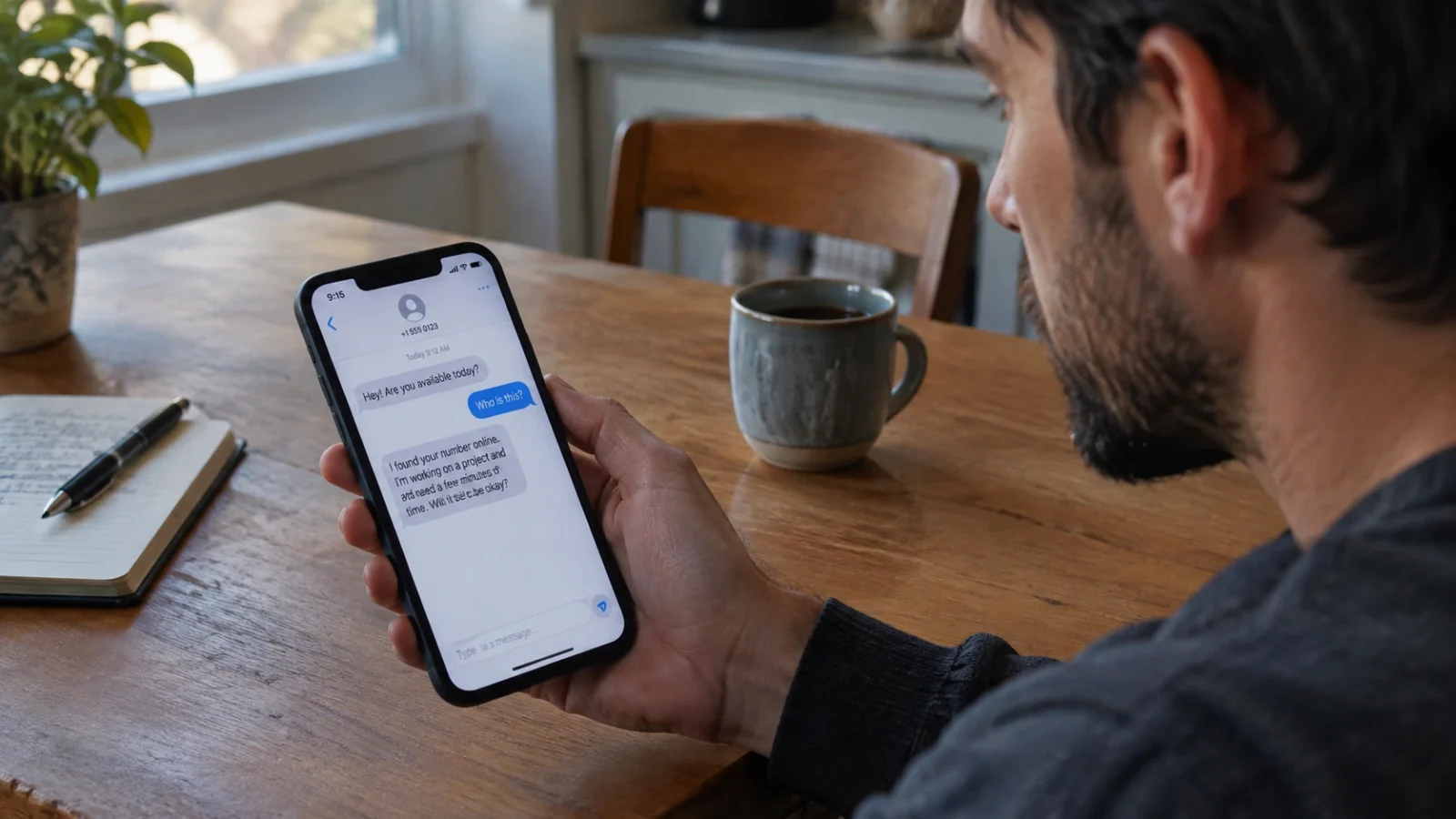
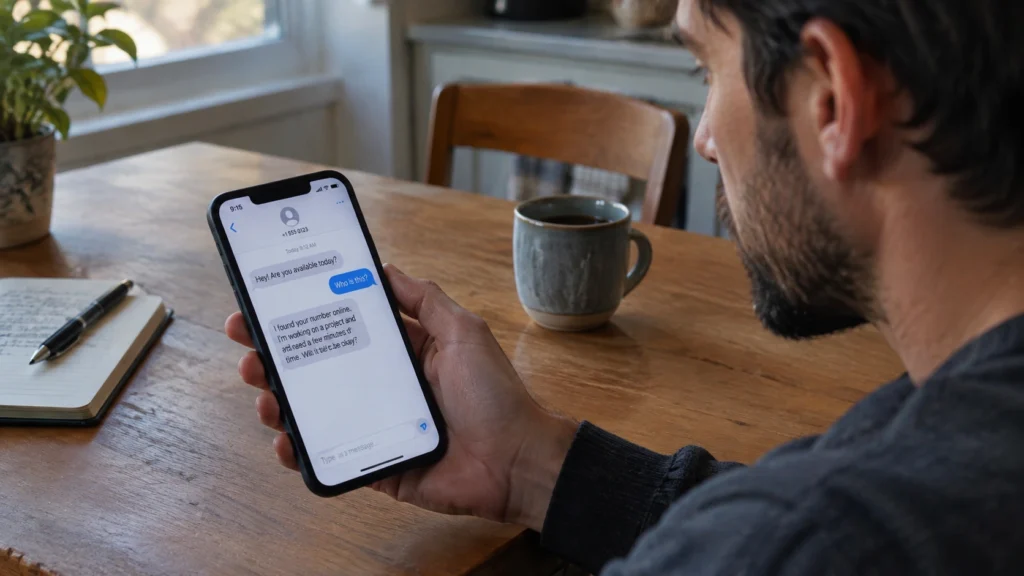
It may start with a wrong-number text, a message on a dating app, or a new friend on social media. The message might say, “Hi, are we still meeting today?” or “Sorry, I think I have the wrong number.”
You reply to correct the mistake. The stranger apologizes and starts a friendly conversation. They may ask about your hobbies, work, family, or daily life.
Not every wrong-number message is a scam. However, be careful when a stranger keeps the conversation going and quickly tries to build a close relationship with you.
Stage 2: The stranger becomes a trusted friend
Over time, the person may message you every day. They remember details about your life, share personal stories, and offer support when you have a problem.
Some scammers pretend to be romantic partners. Others act like helpful friends or successful business owners. They may send photos of a luxury lifestyle to make their stories look real.
This is a form of social engineering. It means using trust, feelings, or pressure to influence someone’s choices. The scammer wants you to trust them before you have a reason to do so.
Stage 3: They introduce a crypto investment
Once the relationship feels strong, the stranger starts talking about money. They might say they earn extra income by trading cryptocurrency or have a special method that brings steady profits.
They may show screenshots of their earnings or offer to guide you through your first investment. They can even encourage you to start with a small amount to make the process feel safe.
But their real goal is to get you to send cryptocurrency to a wallet or platform they control. A person who genuinely cares about you should not pressure you to invest money through an unknown app or website.
Stage 4: They steal the money
The scammer keeps encouraging you to invest more. They may claim that a special trading opportunity will end soon or that a bigger deposit will unlock higher profits.
When you finally try to withdraw your money, the platform blocks the payment or demands another fee. The scammer may stop replying, delete their account, or make new excuses.
By this point, the money may already be gone. The balance you saw on the screen was not proof that your investment was real.
How Fake Crypto Trading Apps Trick People
A fake crypto trading app can look almost like a real financial service. It may have a clean design, account pages, charts, customer support, and a list of digital currencies.
After you send money, the app may show your balance growing every day. You might see a deposit of $500 turn into $650 or more. These numbers can make you believe your investment is working.
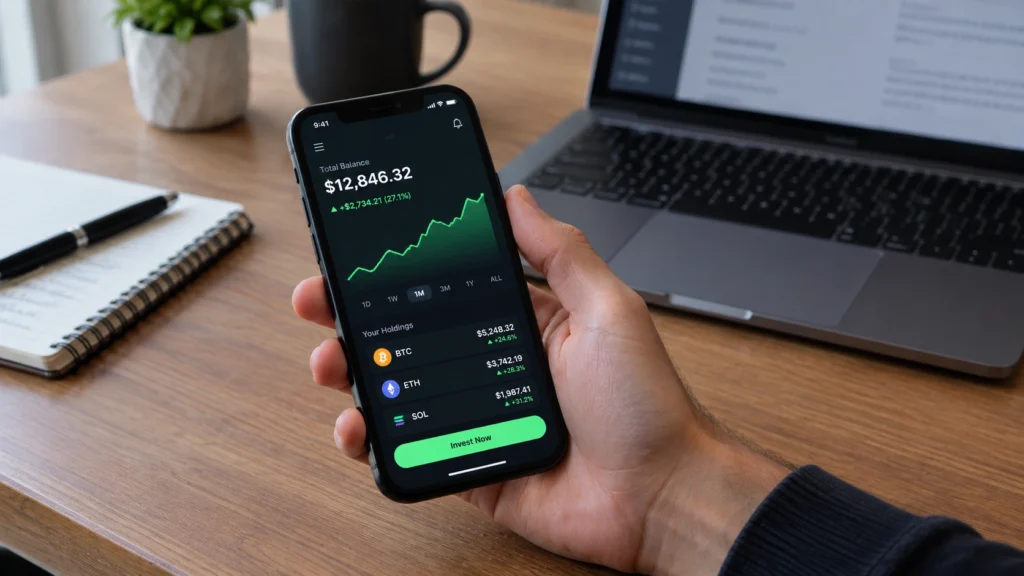
However, the scammer may control the website and the numbers displayed on it. The profits can be made up. Your money may never have been invested in the market at all.
Some scammers allow a small withdrawal at the beginning. This can make the platform seem trustworthy and encourage a larger deposit later. A small payment does not prove the service is honest.
Remember these warning signs:
- A stranger tells you exactly where to invest.
- The platform promises high or steady profits with little risk.
- You must transfer crypto to a wallet supplied by someone you met online.
- The person tells you to keep the investment secret.
- The app shows profits but will not let you withdraw your money freely.
- The website or app has no clear, verifiable company details.
Why Do Crypto Scammers Ask for Taxes Before Withdrawals?
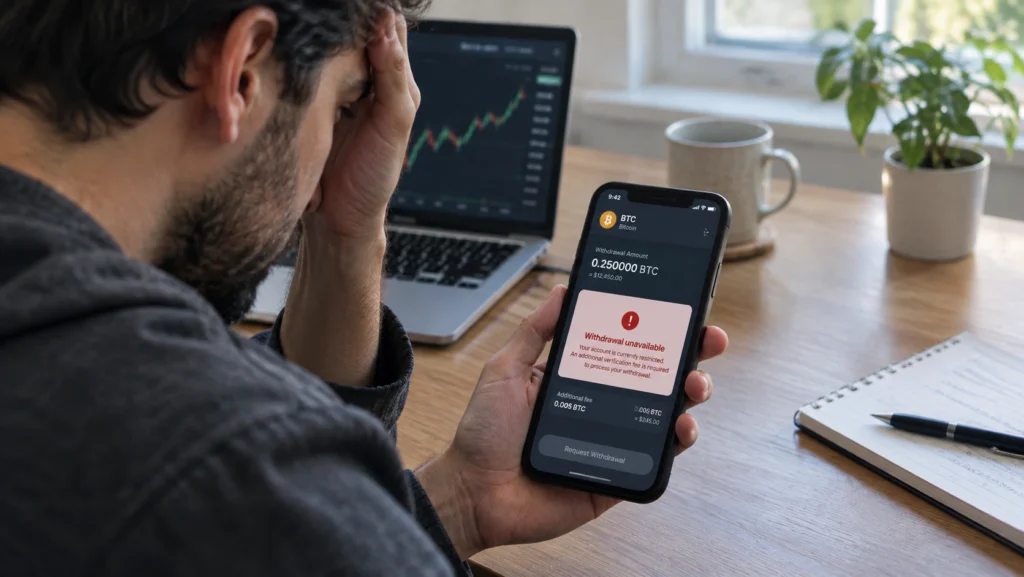
This is one of the most important warning signs. You try to withdraw your supposed profits, but the platform says you must pay a tax, account fee, security deposit, or verification charge first.
The scammer may claim your account is frozen until you pay. They may say the fee is required by the government or that your money will be released within a few hours.
These demands are often part of the scam. The criminal wants another payment from you. After you pay, they may invent a new fee or claim there is another problem with your account.
Real taxes and fees do exist. But a website calling something a “tax” does not make it real. If you are unsure, ask a tax professional or your tax office. Find their phone number or website yourself, not from the app.
Never send more money just to unlock a withdrawal from a platform you suspect is fake. You do not need to pay a scammer again to prove that you deserve your own money.
The FBI’s guide to cryptocurrency investment fraud explains how scammers use fake investments to make people keep sending money.
From a Friendly Text to a Lost Investment
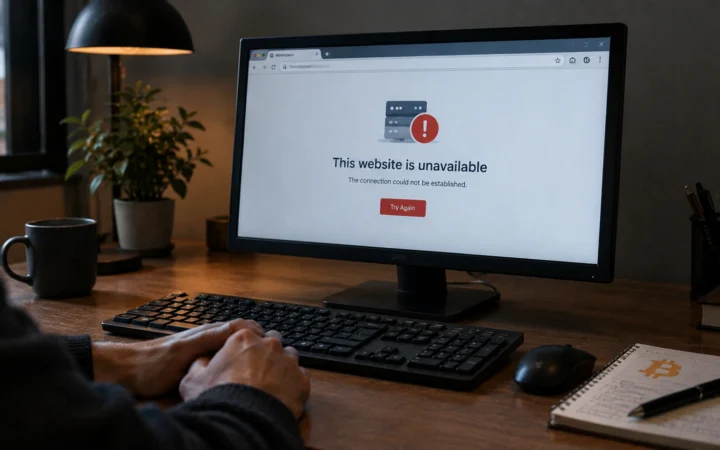
The picture below shows how a pig butchering scam usually ends. The friendly chats and fake profits stop, and the victim cannot get their money back. Here are the four stages in one quick look:
- Stage 1: A stranger sends a friendly message.
- Stage 2: They become your “friend” and earn your trust.
- Stage 3: They show you a fake crypto investment.
- Stage 4: They block your withdrawal and take your money.
How to Protect Yourself From a Pig Butchering Scam
You do not need to be a crypto expert to spot many of these scams. A few simple habits can help protect your money and personal information.
- Take your time. Do not rush into an investment because someone you met online tells you to act today.
- Check the person. Do not assume someone is honest because they have photos, a friendly profile, or a long chat history.
- Research the platform. Look for independent information about the company, its legal status, and its reputation. Do not rely only on links the stranger sends you.
- Be careful with crypto transfers. Cryptocurrency payments can be difficult or impossible to reverse once confirmed.
- Never share secret details. Do not share passwords, wallet recovery words, or private keys with another person.
- Talk to someone you trust. Before sending a large amount of money, ask an independent person to review the situation.
Learn more about how digital money works in our guide to whether Bitcoin can be traced. Remember that a public transaction record does not mean you can easily recover stolen funds.
How to Help a Friend or Family Member Caught in a Scam
Someone caught in a pig butchering scam may feel embarrassed, afraid, or ashamed. They may believe the person they met online really cares about them. They may also believe their displayed profits are real.
Do not laugh at them or blame them for trusting someone. Scammers spend time learning what makes people feel safe and what they hope to achieve. Anyone can be targeted.
Instead, try these steps:
- Listen calmly and let them explain what happened.
- Show them the warning signs without insulting them or the person they trust.
- Encourage them to stop sending money immediately.
- Help them save messages, transaction records, wallet addresses, website links, and payment receipts.
- Help them contact their bank, crypto exchange, or payment provider through official channels.
- Encourage them to report the scam to the right authorities in their country.
They may need time to accept what happened. Stay patient. Helping them stop further payments is more important than proving that you were right.
What to Do After a Pig Butchering Scam
If you have already sent money, act as soon as possible. There is no guarantee that you will recover it, but taking these steps may help protect you and support an investigation.
- Stop sending money. Do not pay more taxes, release fees, or security deposits demanded by the platform.
- Contact your bank or exchange. Explain what happened and ask whether the transfer can be stopped, reported, or reviewed.
- Save your evidence. Keep chat messages, emails, screenshots, transaction IDs, wallet addresses, and payment records.
- Secure your accounts. Change any exposed passwords, enable two-factor authentication, and secure your email and crypto accounts.
- Report the crime. In the United States, you can file a report with the FBI Internet Crime Complaint Center. Elsewhere, contact your national cybercrime reporting service or local police.
Watch out for people who contact you later and promise to get your stolen crypto back if you pay first. These are called recovery scams, and they target people who already lost money. No honest service can promise to return stolen crypto.
Police can sometimes find and seize stolen money. For example, the U.S. Department of Justice shared a crypto scam case where nearly $9 million was seized. Cases like this help, but they do not mean every victim gets their money back.
Frequently Asked Questions
What is a pig butchering scam in simple words?
It is a scam where someone builds trust with you and then tricks you into sending money to a fake investment. The scammer may pretend to be a friend or romantic partner and use a fake crypto app to show made-up profits.
Can I get my money back from a pig butchering scam?
Sometimes funds can be traced or frozen, but recovery is not guaranteed. Contact your bank or exchange quickly, save evidence, and report the crime. Avoid anyone who promises guaranteed recovery for an upfront fee.
Why do scammers use cryptocurrency?
Cryptocurrency can be transferred across borders quickly, and confirmed transfers may be hard to reverse. Scammers use these features to move stolen funds. This does not mean cryptocurrency itself is a scam.
Is every stranger who talks about crypto a scammer?
No. But be careful when someone you recently met builds a personal relationship and then pushes you to invest through their chosen website or wallet. Never invest money you cannot afford to lose based only on their advice.
What if the fake investment app still shows my money?
A displayed balance does not prove that the money exists or belongs to you. Do not pay extra fees to unlock it. Save screenshots and transaction records, then contact your bank, exchange, and relevant authorities.
Helpful Links and Official Sources
Use these trusted resources to learn more about cryptocurrency fraud, online safety, and reporting scams.
- FBI: Cryptocurrency Investment Fraud
- U.S. Treasury FinCEN: Alert on Pig Butchering Scams
- FBI IC3: Report Internet Crime
- FBI IC3: 2024 Internet Crime Report
- U.S. Department of Justice: Cryptocurrency Scam Case
- FTC: What to Know About Cryptocurrency and Scams
- FTC: How to Recognize and Avoid Phishing Scams
Want to learn more? Read our DeepHiDX dark web glossary for simple meanings of common terms, and our guide on whether Bitcoin can be traced. Got a strange text? Read how to tell if a message is a scam before you reply or click a link.
The Short Version
A pig butchering scam starts with trust and ends with a fake investment. A stranger may become a friend, show you fake crypto profits, and ask you to send more money. When you try to withdraw it, they may demand more fees or disappear.
Take your time before trusting online investment advice. Never send money just because someone you met online asks you to. If you think you have been targeted, stop payments, save evidence, and report the scam.
Stay informed. Stay careful. Every Data Leaves a Footprint.


Comments