
By Ehtijad Ali · Updated October 2026 · About 8 minutes to read
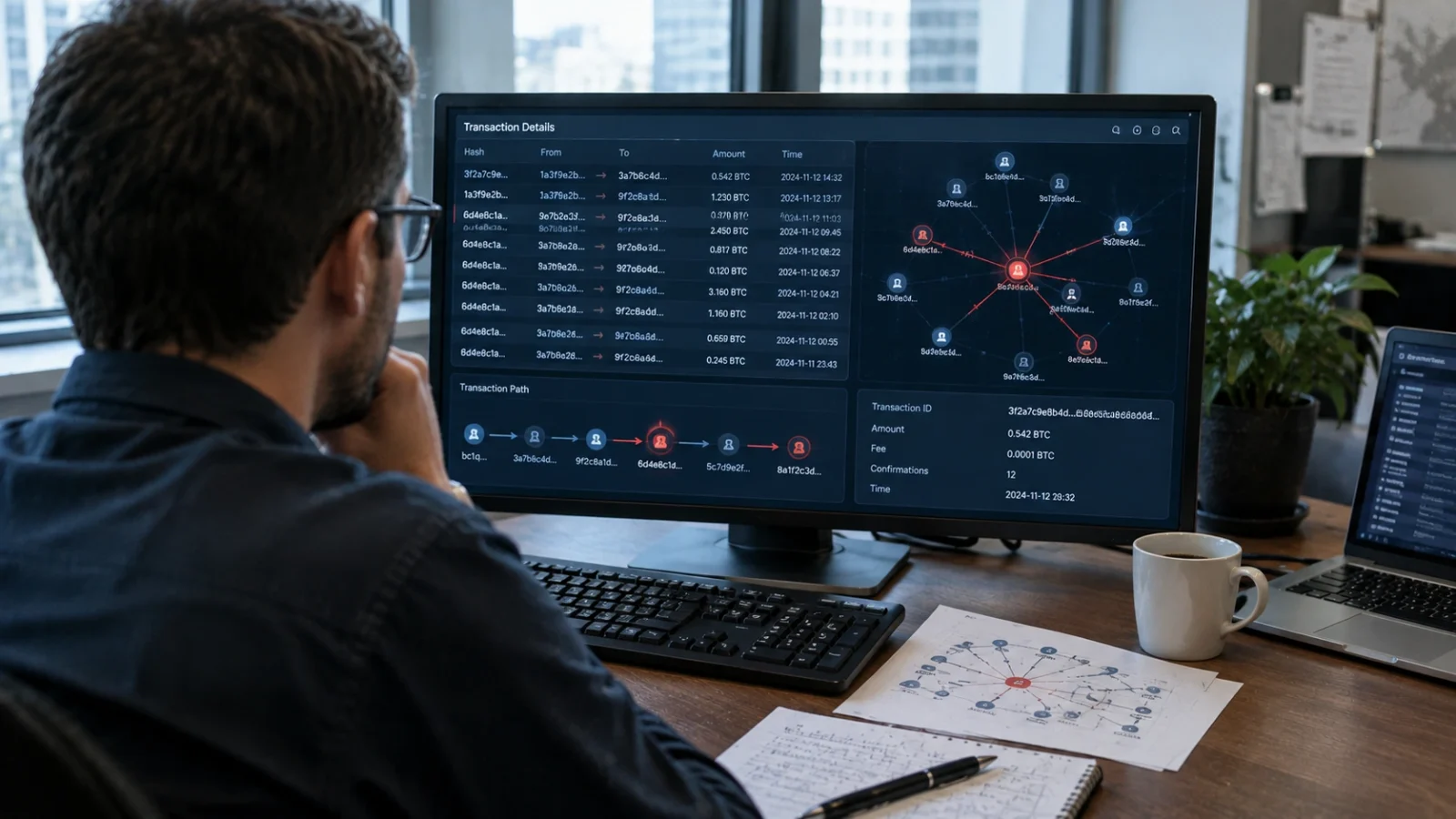
Can Bitcoin be traced? Yes. Every Bitcoin payment is written down in a giant public record that anyone can look at. Investigators can follow money from wallet to wallet, sometimes across hundreds of steps.
But there is a catch. Following the money is not the same as knowing who owns it. To find the real person, investigators usually need more clues, like records from crypto exchanges.
Quick answer
Bitcoin is not fully anonymous. Every payment is saved on a public list called the blockchain. Investigators can follow the money and sometimes match it to a real person using exchange records and other evidence. Tracing is powerful, but it does not show a name by itself.
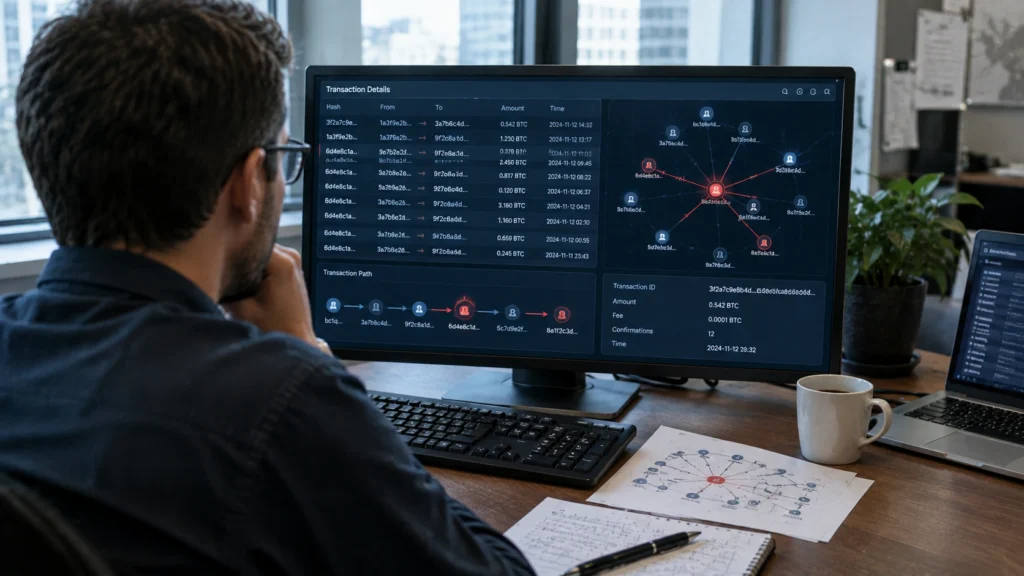
In this easy guide, you will learn how Bitcoin tracing works, how investigators link wallets together, why exchanges matter, and how the FBI got back Bitcoin paid in the Colonial Pipeline ransomware attack.
What is in this guide?
Is Bitcoin anonymous?
Not really. A better word is pseudonymous. That means “using a fake name.”
When you send Bitcoin, the record does not show your real name. It shows a wallet address, which is a long string of letters and numbers. Think of it like a nickname or a locker number.
Here is the important part: everything that nickname does is saved forever in public. If anyone ever finds out that a nickname belongs to you, they can look back at all your old payments.
You can see this for yourself. A free tool called a block explorer, like the Blockchain.com Explorer, lets anyone look up Bitcoin payments. It shows the money moving, but not the names of the people.
Even Bitcoin’s creator wrote about this. The original Bitcoin white paper explains that all payments are public, and privacy comes only from keeping addresses unlinked to names.
How do investigators trace Bitcoin?
Tracing Bitcoin is a bit like following footprints in the snow. Here are the main steps.
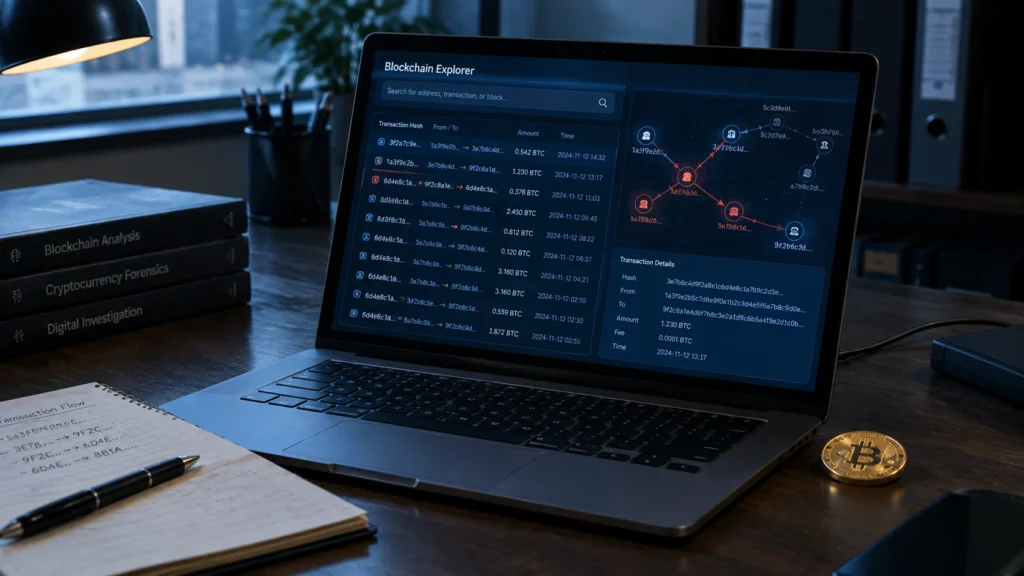
1. Find the first payment
Investigators start with a clue, like a ransom payment or a stolen wallet. Every payment has its own ID number, called a transaction ID. Looking it up shows where the money came from and where it went.
2. Follow the money
Next, they follow each step as the Bitcoin moves from one wallet to another. Sometimes the money is split into smaller pieces or mixed with other payments. So the path is not always a straight line.
3. Look for linked wallets
Investigators look for patterns that show many wallets belong to the same person or group. This helps them see the bigger picture.
4. Connect it to the real world
Finally, they look for something that links a wallet to a real person. This could be an exchange account, a seized phone or laptop, emails or bank records. Police usually need legal permission, like a court order, to get these records.
Companies like Chainalysis build software to help with this work. Their guide “Can you track Bitcoin transactions?” explains it in more detail.
What is address clustering?
Address clustering means grouping wallets that seem to belong to the same owner. It is like noticing that several lockers are always opened by the same key.
Here are two common clues:
- Spending together: if one payment uses Bitcoin from several addresses at once, those addresses often belong to the same person.
- Change addresses: when you pay with Bitcoin, the “change” often goes back to a new address you own. Spotting that change helps link payments together.
But clustering is not perfect. Some people team up to make shared payments on purpose, which can trick these clues. A wrong guess can blame the wrong person. That is why good investigators keep what they see separate from what they guess.
Chainalysis has a clear page on how address clustering works.
How crypto exchanges can reveal who you are
A crypto exchange is a website or app where people buy and sell Bitcoin for regular money. Most big exchanges ask for your name, photo ID and bank details before you can use them. This is called “Know Your Customer,” or KYC.
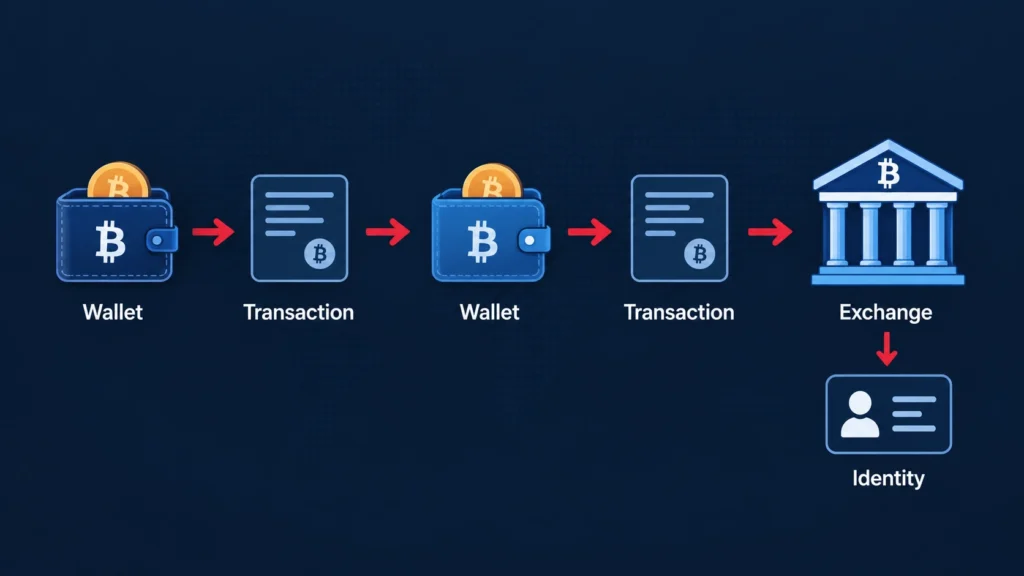
Here is a simple example. Bitcoin moves through five different wallets. Then it lands in an exchange account. The blockchain shows the money arriving. If police legally ask the exchange for records, they may learn whose account it is.
Still, that does not prove the account owner controlled every earlier wallet. Someone else might have sent the money. Investigators need more evidence to be sure.
This is one reason police have caught so many dark web criminals. Read our guide on how police catch dark web criminals to see the other methods they use.
Colonial Pipeline: a real Bitcoin tracing case
In May 2021, a ransomware gang called DarkSide attacked Colonial Pipeline, a company that moves fuel across the eastern United States. The attack caused fuel shortages, and the company paid a ransom of about 75 Bitcoin.
About a month later, in June 2021, the U.S. Department of Justice announced it had taken back about 63.7 Bitcoin of that ransom. Investigators followed the payment through several transfers on the public blockchain and found the wallet holding the money. The FBI had the private key to that wallet, so it could take control of the coins.
This case teaches two big lessons:
- Moving Bitcoin through many wallets does not erase the trail.
- Finding the money and getting it back are different jobs. Tracing found the wallet. Having the private key let the FBI take the coins.
Not every case ends this well. You can read the official Department of Justice announcement. To learn why victims like Colonial Pipeline end up paying, see our guide are backups enough against ransomware?
Do mixers and privacy coins stop tracing?
Some tools try to make Bitcoin harder to follow. They can make tracing harder, but none of them is a perfect hiding place.
Bitcoin mixers
A mixer (also called a tumbler) is like a big blender for coins. Many people put Bitcoin in, it gets mixed up, and different coins come out. This makes it harder to match who sent what.
But investigators can still study the money going in and out, the timing and the exchange records. In May 2022, the U.S. Treasury placed its first-ever sanctions on a crypto mixer, called Blender.io, saying it helped North Korean hackers hide stolen money.
Privacy coins like Monero
Monero is a different cryptocurrency built to hide more details of each payment. Most Bitcoin tracing tricks do not work on it in the same way.
Still, clues can be found off the blockchain, such as exchange records, seized devices or messages. How much investigators can learn changes from case to case.
What Bitcoin tracing cannot prove on its own
The blockchain is a powerful clue, but it has limits. By itself, it cannot always show:
- Who: an address does not show a person’s name or where they live.
- Ownership: a link between wallets does not always prove who owns the money.
- Why: the record does not say why a payment was made.
- Control: an exchange address is shared by many customers, not just one person.
- Recovery: finding the money does not mean police can take it back.
So if a wallet is linked to a crime, that does not mean everyone who ever sent it money is a criminal. Investigators must look at all the evidence and follow the law.
Bitcoin tracing has a long history on the dark web. Our story of the Silk Road dark web market shows how Bitcoin evidence played a part in the case against one of the first big dark web markets.
Questions people ask
Can Bitcoin transactions be traced?
Yes. Every Bitcoin payment is saved on a public blockchain, so anyone can follow money between addresses. Linking those addresses to real people usually needs more evidence.
Can a Bitcoin wallet be traced to a person?
Sometimes. A wallet can be linked to a person through exchange records, seized devices or other clues. The address alone does not show who someone is.
Can Bitcoin be traced after a mixer?
Sometimes. A mixer makes links harder to find, but investigators may still find clues in the payments before and after, in timing, or in exchange records.
How long can Bitcoin payments be traced?
The record is designed to last forever. Old payments can still be looked up years later, although finding the people behind them can get harder over time.
Can the police trace stolen Bitcoin?
Yes, police can follow stolen Bitcoin on the blockchain. Getting it back depends on where it went, whether exchanges help, and whether police can legally take control of it.
Is Bitcoin more private than cash?
Usually not. Cash does not leave a public record of every payment. Bitcoin hides names, but its permanent public history can make money easier to follow later.
Helpful sources
We used official government pages and trusted expert sources for this guide:
- U.S. Department of Justice: Colonial Pipeline Bitcoin seizure
- U.S. Treasury: First sanctions on a virtual currency mixer
- Bitcoin: A Peer-to-Peer Electronic Cash System (white paper)
- Chainalysis: Can you track Bitcoin transactions?
- Chainalysis: What is address clustering?
- Blockchain.com Explorer: look up public Bitcoin payments
For more background, see our dark web glossary, our dark web timeline, and our Sources and Research page. Curious where Bitcoin’s ideas came from? Read about the Cypherpunks.
The short version
So, can Bitcoin be traced? In most cases, yes. Every payment is saved on a public blockchain, and investigators can follow the money and group wallets together. Exchange records and other clues can then link the money to real people.
Mixers and privacy coins can make this harder. And remember: following the money, finding the person and getting the money back are three different jobs. The Colonial Pipeline case shows how following the money can lead to getting some of it back.
This article is for learning only. It is not legal or financial advice.

Comments